
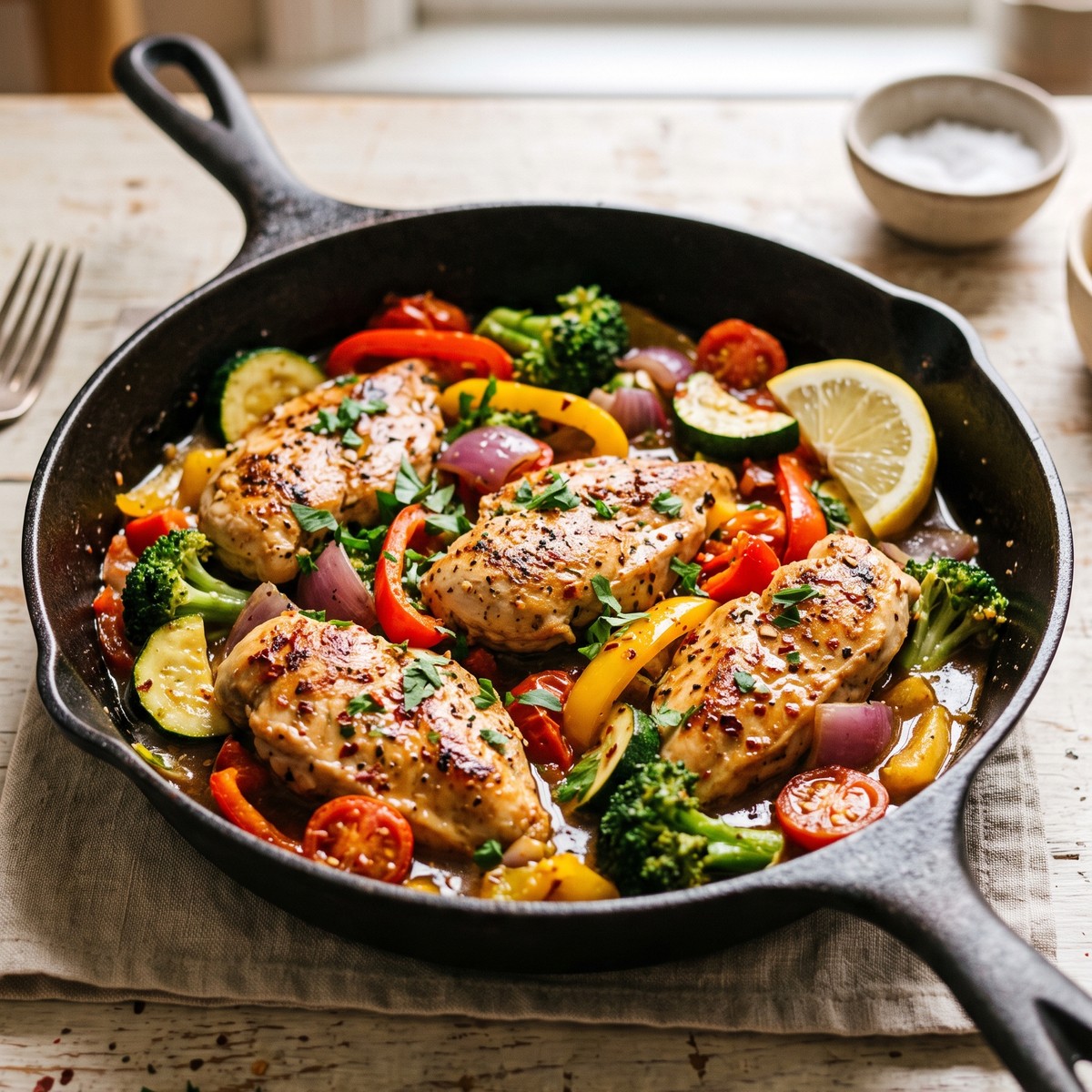
Chicken and Vegetable Skillet is a colorful one-pan dinner with tender chicken breast, crisp broccoli, sweet bell peppers, and red onion coated in a glossy honey-soy sauce. The chicken sears first for lightly golden edges, while the vegetables stay bright and slightly crisp instead of turning soft. A simple broth-and-cornstarch mixture thickens directly in the skillet, so there is no separate sauce pan and very little cleanup. With about 15 minutes of prep and 15 minutes of cooking, this balanced skillet fits busy weeknights, lunch prep, or a last-minute dinner over rice, quinoa, or noodles. The result is savory, lightly sweet, and flexible enough for easy vegetable swaps.
Why This Chicken and Vegetable Skillet Works
This skillet keeps the ingredient list focused while delivering contrast, color, and a practical cooking flow.
- One-pan method: Chicken, vegetables, and sauce cook in the same skillet, which keeps cleanup light and lets the browned bits season the finished sauce.
- Fast, even cooking: Cutting the chicken into 1-inch chunks helps it sear quickly and finish at the same time as the vegetables.
- Balanced texture: Broccoli and peppers cook just until crisp-tender, giving the skillet structure instead of a soft, steamed texture.
- Reliable sauce: Chicken broth, soy sauce, honey, and cornstarch create a glossy coating that clings to every piece without feeling heavy.
- Flexible serving: The finished skillet works over rice, quinoa, noodles, or cauliflower rice and reheats well for planned lunches.
Ingredients Notes
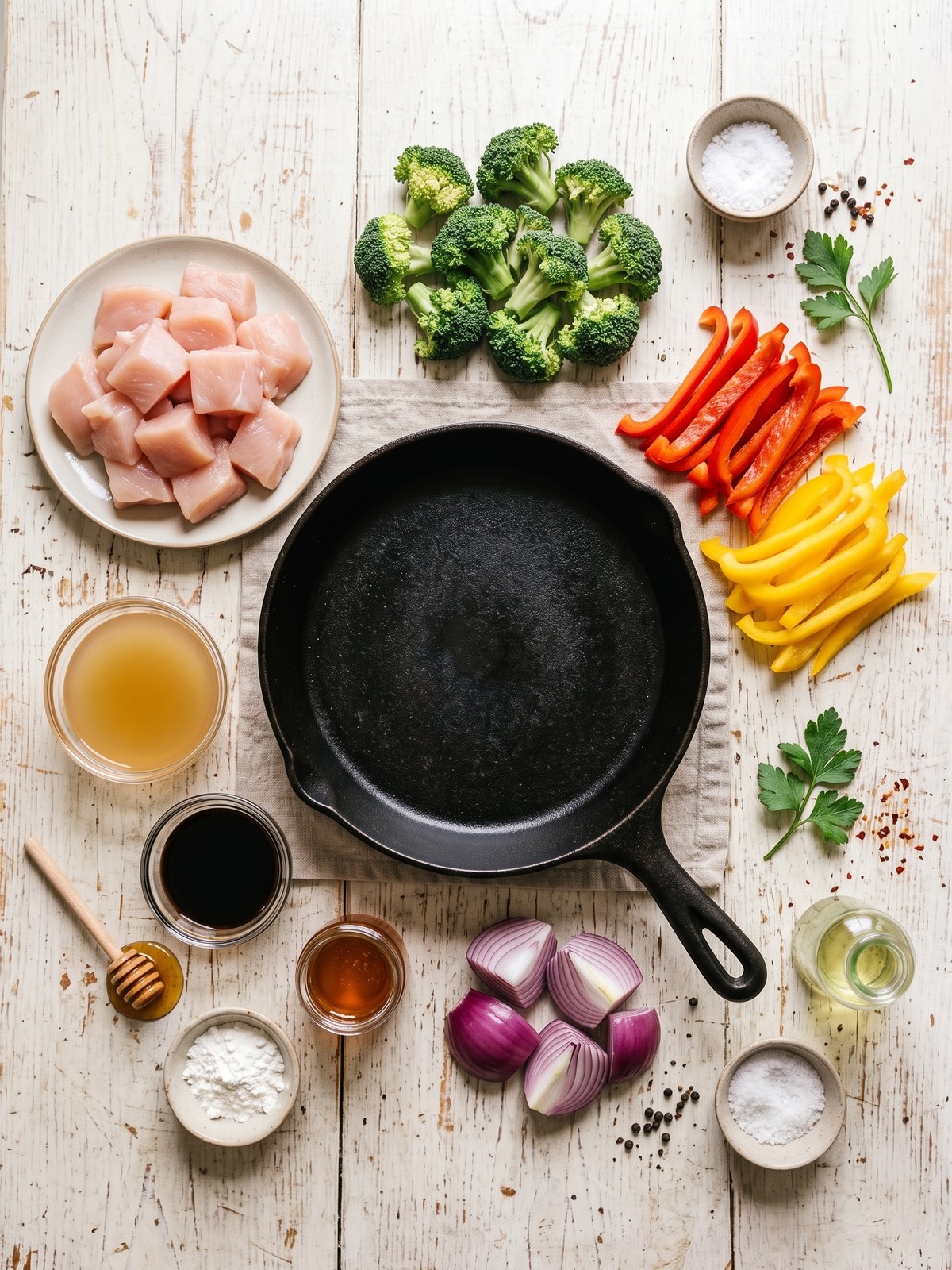
- Chicken Breast (1.5 lbs / 680g): Cut the chicken into even 1-inch pieces so it browns quickly and cooks through without drying. I prefer patting it dry before searing.
- Broccoli Florets (2 cups / 150g): Use bite-sized florets with similar thickness so the stems soften while the tops stay green and lightly crisp.
- Red Bell Pepper (1 medium): Slice it into strips for sweetness, color, and enough surface area to pick up the sauce.
- Yellow Bell Pepper (1 medium): The yellow pepper adds another sweet layer and keeps the skillet especially bright and visual.
- Red Onion (1 small): Thin wedges soften at the edges while holding their shape, adding mild sharpness against the honey-soy sauce.
- Chicken Broth (1/2 cup / 120ml): Low-sodium broth gives the sauce body without making it overly salty alongside the soy sauce.
- Soy Sauce (1/4 cup / 60ml): Low-sodium soy sauce provides the savory base and leaves room to adjust seasoning after the sauce reduces.
- Honey (1 tablespoon / 15ml): A small amount rounds out the soy sauce and helps the glaze look shiny without becoming dessert-sweet.
- Cornstarch (1 tablespoon / 8g): Whisk it into the cold broth mixture until fully smooth so the sauce thickens evenly.
- Avocado Oil (2 tablespoons / 30ml): Its high smoke point works well for searing the chicken over medium-high heat.
Before You Begin
- Use a wide skillet: A 12-inch skillet gives the chicken enough room to brown instead of steam.
- Prep everything first: The recipe moves quickly once the pan is hot, so slice the vegetables and whisk the sauce before cooking.
- Dry the chicken: Blot the pieces with paper towels to support browning and reduce excess moisture in the skillet.
- Whisk the sauce well: Cornstarch settles quickly, so stir the mixture again just before pouring it into the pan.
I keep the chicken in a single layer and sear it in two batches when needed; crowding the skillet creates steam and prevents those lightly golden edges.
How to Make Chicken and Vegetable Skillet
- Step 1 – Mix the Sauce: Whisk the chicken broth, soy sauce, honey, and cornstarch in a small bowl until no white streaks or lumps remain.
- Step 2 – Heat the Skillet: Warm 1 tablespoon avocado oil in a large skillet over medium-high heat until it looks fluid and shimmery.
- Step 3 – Sear the Chicken: Add the chicken in one layer and cook for 5 to 7 minutes, turning occasionally, until lightly browned and nearly cooked through. Transfer it to a plate.
- Step 4 – Cook the Vegetables: Add the remaining oil, broccoli, bell peppers, and red onion. Cook for 4 to 5 minutes, stirring occasionally, until bright and crisp-tender.
- Step 5 – Add the Sauce: Stir the sauce again, pour it into the skillet, and cook for 1 to 2 minutes until it bubbles and begins to thicken.
- Step 6 – Finish the Skillet: Return the chicken and any juices to the pan. Toss for 2 to 3 minutes until the chicken is coated, hot, and fully cooked.
How to Know It’s Done
- Chicken temperature: The thickest chicken pieces should reach 165°F / 74°C on an instant-read thermometer.
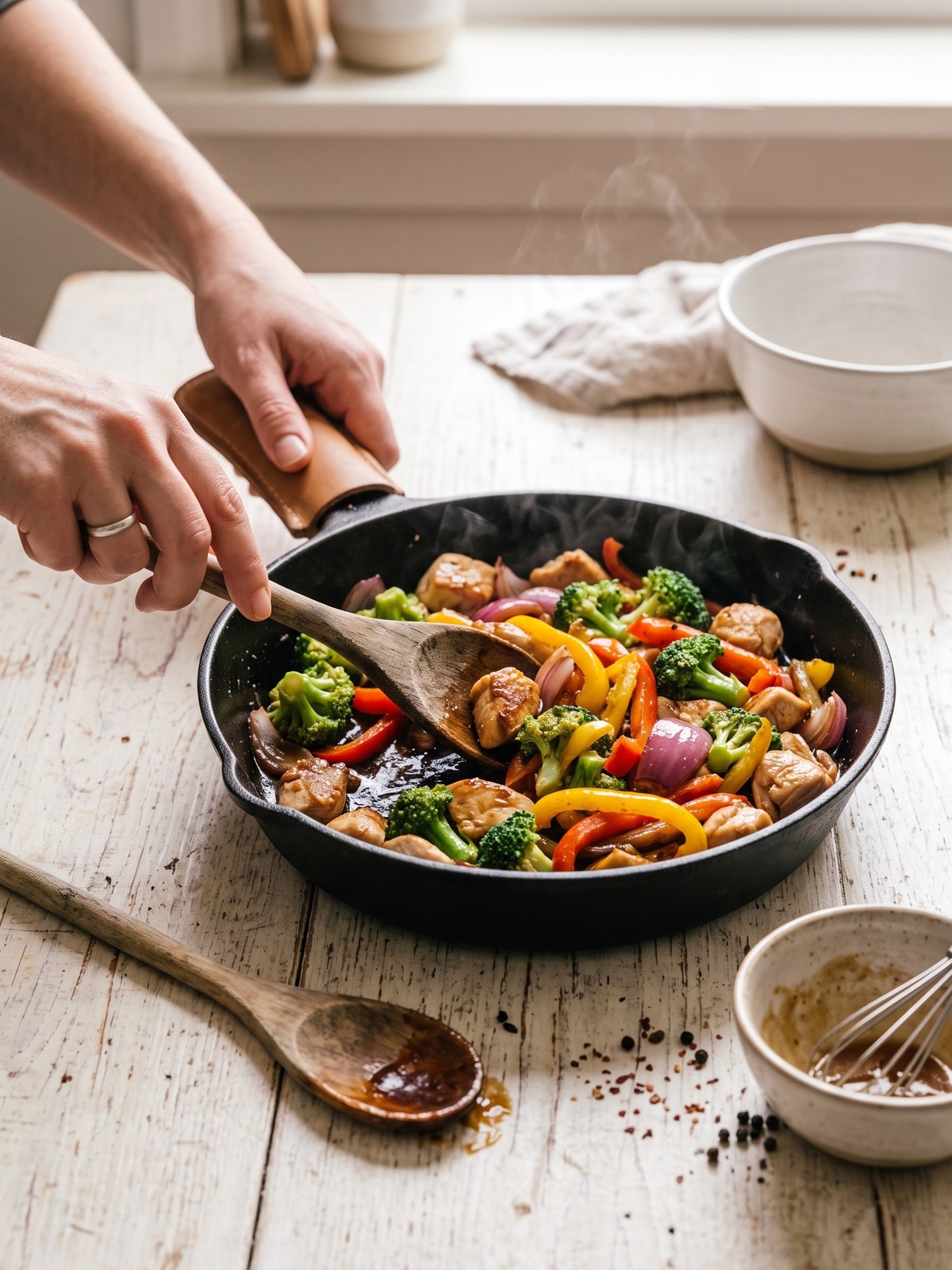
- Vegetable texture: Broccoli should be bright green and pierce easily while still offering a slight bite.
- Sauce consistency: The sauce should lightly coat a spoon and cling to the chicken and vegetables.
- Final appearance: The skillet should look glossy, colorful, and moist without a pool of thin liquid at the bottom.
Nora’s Tips for Best Results
- Cut evenly: Keep the chicken pieces close in size so smaller pieces do not overcook before the larger ones are safe.
- Keep the heat steady: Medium-high heat supports browning, but reduce it slightly if the fond begins to darken too fast.
- Do not overcook the vegetables: I usually stop when the broccoli turns vivid green and the peppers still hold their shape.
- Stir before pouring: Cornstarch sinks as the sauce sits, so one final whisk prevents uneven thickening.
- Taste at the end: I recommend checking salt only after the sauce reduces because soy sauce becomes more concentrated as it cooks.
Storage & Leftovers Tips
- Fridge: Cool leftovers promptly and refrigerate in an airtight container for up to 4 days.
- Freezer: Freeze portions for up to 2 months, noting that the peppers and broccoli will soften after thawing.
- Reheat: Warm gently in a covered skillet with 1 to 2 tablespoons of broth, stirring until the chicken reaches 165°F / 74°C.
- Microwave: Reheat individual servings in 30-second intervals, stirring between each round to protect the chicken from drying.
- Separate grains: Store rice or noodles apart when possible so they do not absorb all the sauce overnight.
Variations & Substitutions
- Chicken thighs: Use boneless, skinless thighs cut into chunks for a slightly richer result; allow an extra minute or two of cooking.
- Different vegetables: Swap in snap peas, zucchini, mushrooms, or green beans while keeping the total vegetable volume close to the original.
- Garlic and ginger: Add 2 minced garlic cloves and 1 teaspoon grated ginger with the vegetables for a sharper aromatic layer.
- Maple option: Replace the honey with pure maple syrup for similar sweetness and a slightly deeper finish.
- Gluten-free version: Use certified gluten-free tamari instead of soy sauce and confirm the broth and cornstarch are gluten-free.
What to Serve With Chicken and Vegetable Skillet
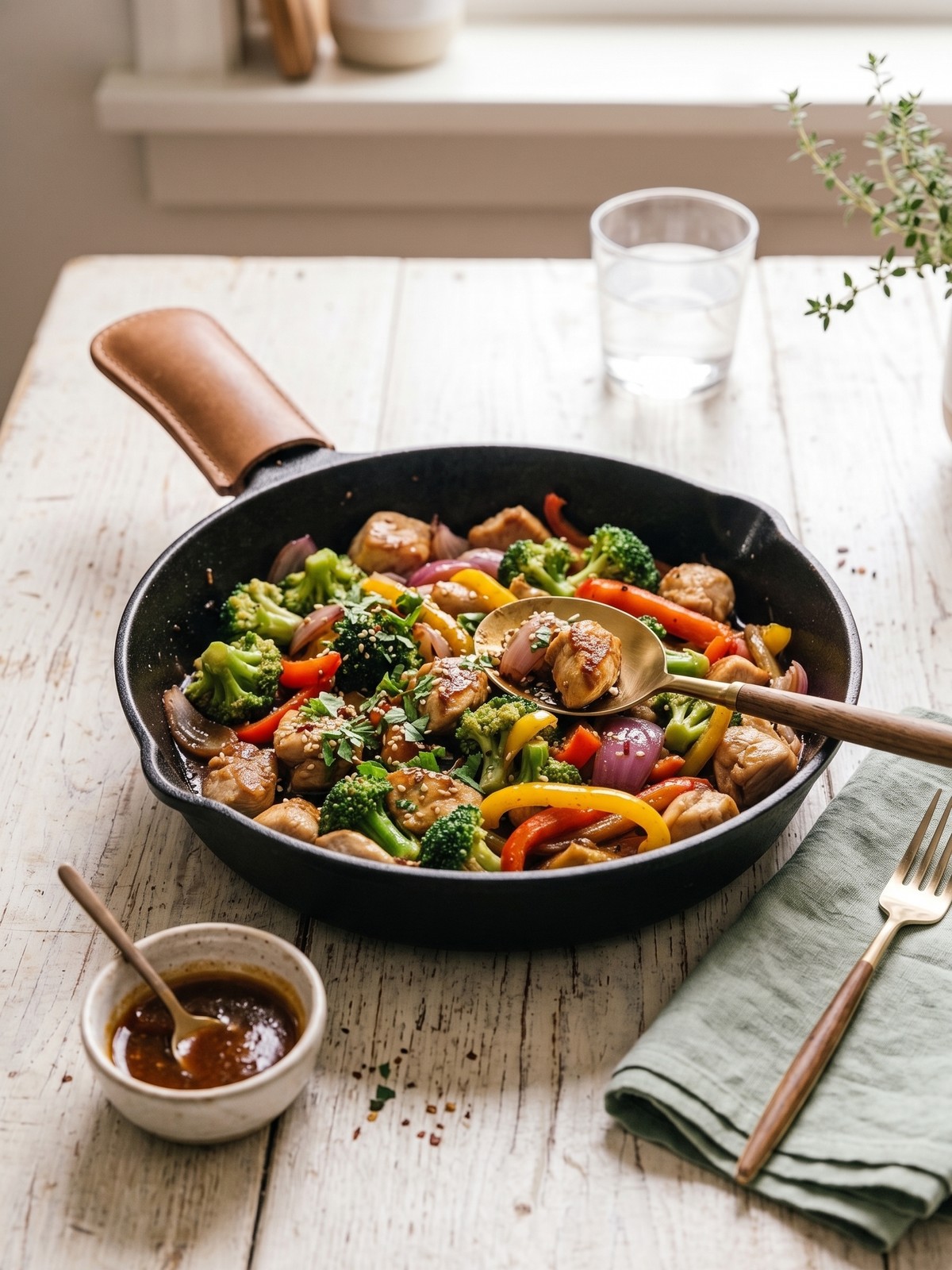
- Steamed jasmine rice: Its soft texture absorbs the glossy sauce and turns the skillet into a complete dinner.
- Brown rice: A nutty, sturdy base adds extra chew and works especially well for packed lunches.
- Quinoa: This lighter grain keeps the meal balanced while adding a subtle earthy note.
- Rice noodles: Tossed noodles make the dish feel more substantial and catch the sauce between every strand.
- Cucumber salad: A cool, vinegar-dressed side brings contrast to the warm, savory skillet.
- Sesame garnish: Toasted sesame seeds and sliced scallions add crunch, freshness, and a polished finish.
FAQs
Yes. Chop the vegetables, cube the chicken, and whisk the sauce up to 24 hours ahead, storing each component separately in the refrigerator.
Frozen vegetables can work, but they release more water. Cook them from frozen over high heat and expect a softer final texture.
Cut it evenly, avoid crowding the skillet, and remove it once nearly cooked. The final sauce simmer brings it safely to 165°F / 74°C.
The cornstarch may have settled or the sauce may not have simmered. Whisk before pouring, then let the mixture bubble for one to two minutes.
Low-sodium tamari or coconut aminos can replace soy sauce. Coconut aminos are sweeter, so reduce the honey slightly and season after cooking.
Yes, freeze cooled portions for up to 2 months. Thaw overnight in the refrigerator and reheat gently with a splash of broth.
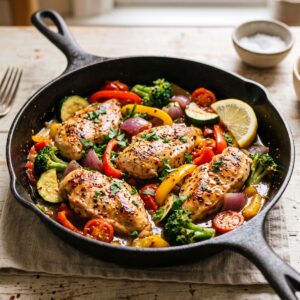
Chicken and Vegetable Skillet
Equipment
- 12-inch skillet
- Small Mixing Bowl
- Whisk
- Instant-read thermometer
Ingredients
- 1.5 lbs chicken breast cut into 1-inch chunks
- 2 cups broccoli florets bite-sized
- 1 medium red bell pepper sliced into strips
- 1 medium yellow bell pepper sliced into strips
- 1 small red onion cut into thin wedges
- 0.5 cup chicken broth low-sodium
- 0.25 cup soy sauce low-sodium
- 1 tablespoon honey
- 1 tablespoon cornstarch
- 2 tablespoons avocado oil divided, for high-heat searing
Instructions
- Whisk the chicken broth, soy sauce, honey, and cornstarch until smooth.
- Heat 1 tablespoon avocado oil in a 12-inch skillet over medium-high heat.
- Sear the chicken for 5 to 7 minutes until lightly browned and nearly cooked through, then transfer it to a plate.
- Add the remaining oil, broccoli, bell peppers, and red onion; cook for 4 to 5 minutes until crisp-tender.
- Whisk the sauce again, pour it into the skillet, and simmer for 1 to 2 minutes until thickened.
- Return the chicken to the skillet and cook for 2 to 3 minutes, tossing until coated and the chicken reaches 165°F / 74°C.