
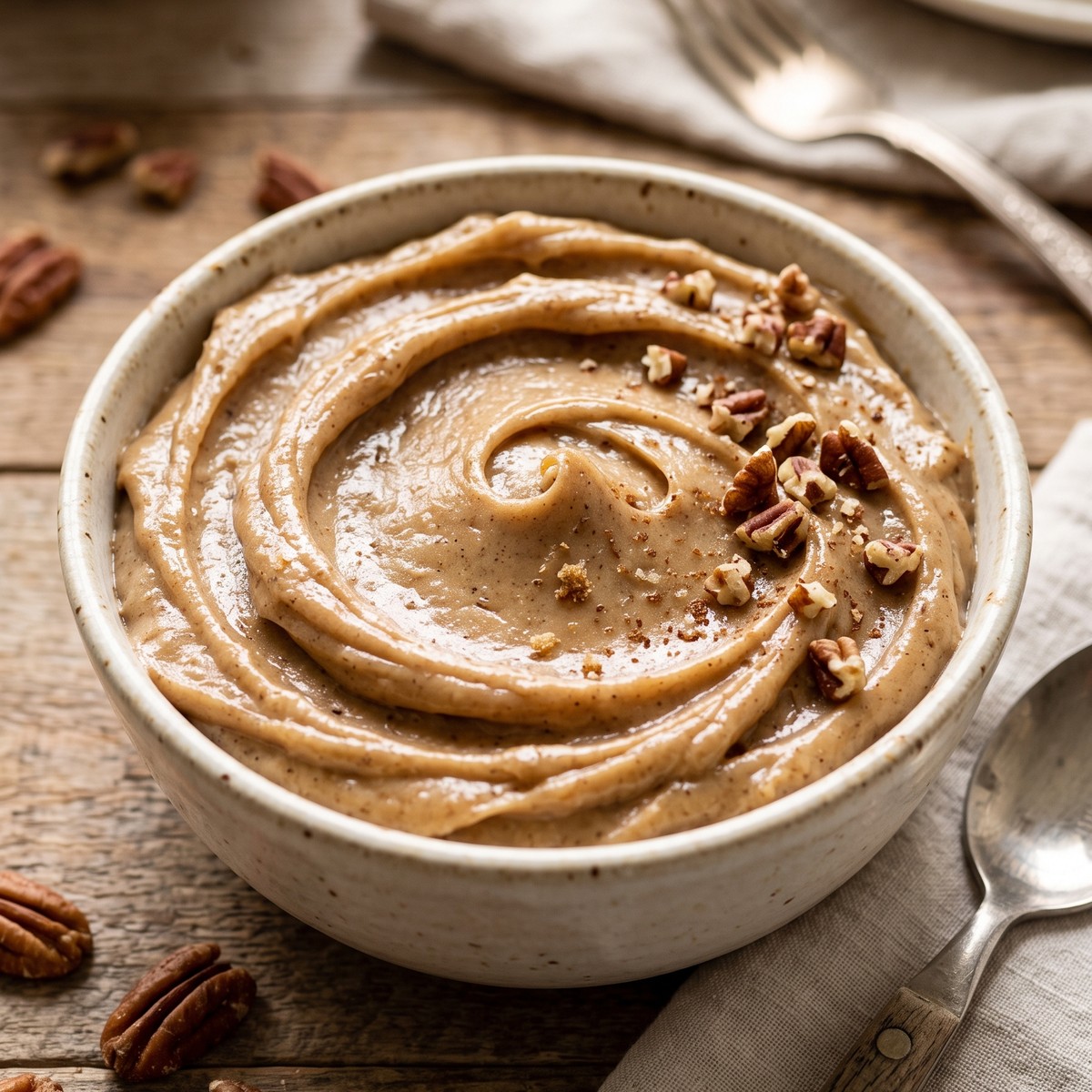
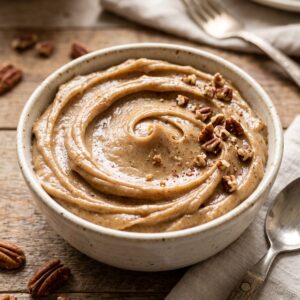
Brown butter frosting is a rich, nutty, and silky buttercream made by browning high-quality butter until golden and fragrant, then whipping it with confectioners’ sugar, vanilla bean paste, and a touch of cream. This frosting has a deep caramel-like flavor that pairs beautifully with vanilla cake, spice cupcakes, or even simple yellow sponge cake. It takes about 15 minutes of hands-on prep plus 30 minutes of cooling time, and it’s an easy no-bake addition to any dessert.
Why This Brown Butter Frosting Recipe Works
This frosting stands out because the browned butter adds a warm, toasty depth that regular buttercream can’t match. Here’s why you’ll want to save it:
- Nutty, caramelized flavor: Browning the butter creates rich, toasty notes that make the frosting taste complex and decadent.
- Silky, spreadable texture: The combination of sifted sugar and heavy cream gives it a smooth, pipeable consistency that’s easy to work with.
- Simple, pantry-friendly ingredients: You only need butter, sugar, vanilla, salt, and cream—no eggs or special equipment.
- Versatile for many desserts: It’s perfect for cakes, cupcakes, cookies, or even as a filling for no-bake treats.
- Make-ahead friendly: The frosting can be made in advance and stored in the fridge, then brought to room temperature before using.
Ingredients Notes
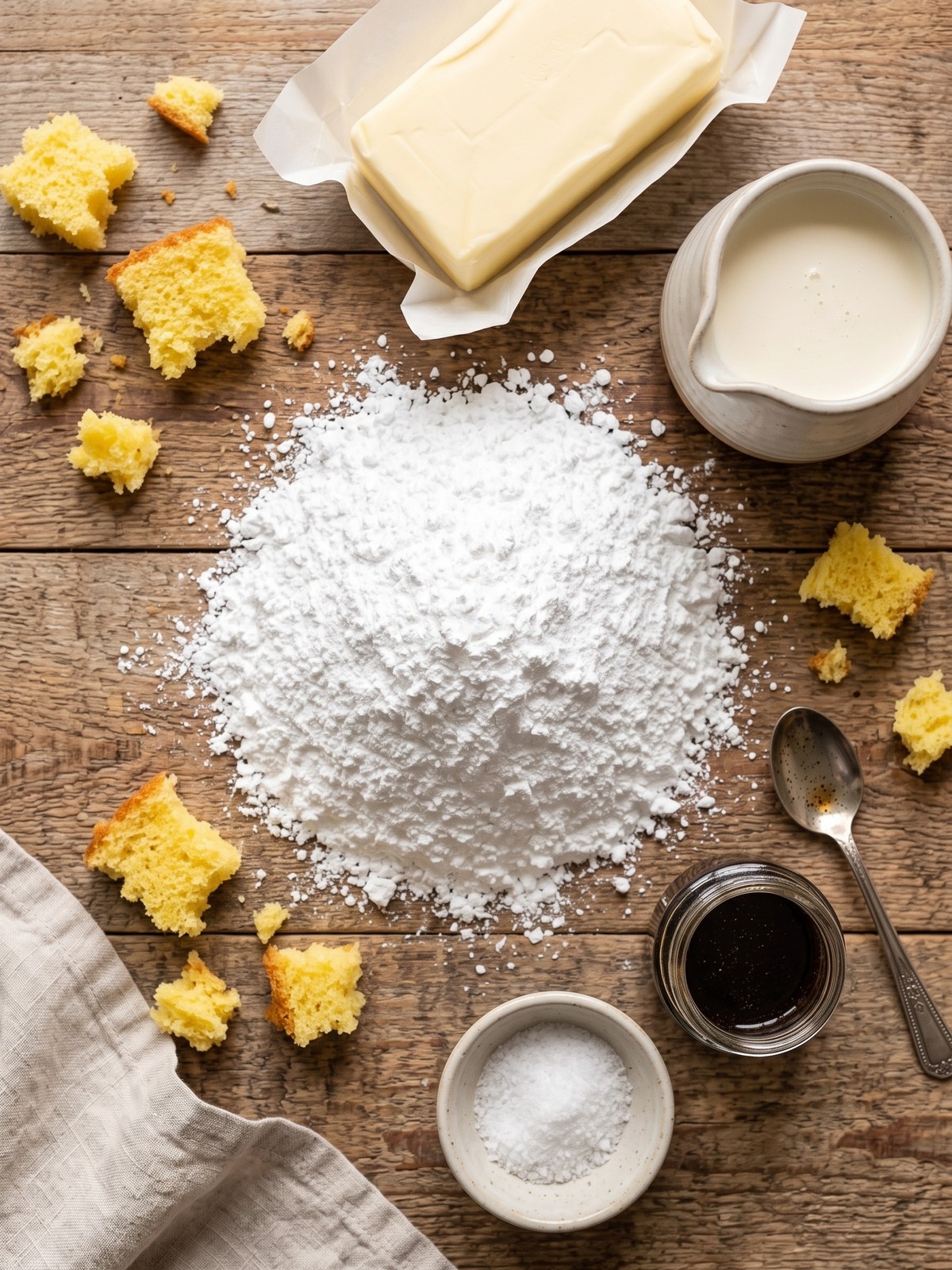
- Unsalted butter (1 cup, high quality): Use a good European-style butter with at least 82% fat for the best flavor and texture. Browning it until amber and nutty is the key step.
- Confectioners’ sugar (4 cups, sifted): Sifting removes lumps and ensures a silky smooth frosting. Don’t skip this step.
- Vanilla bean paste (1 tsp): Adds intense vanilla flavor with those pretty specks. You can substitute pure vanilla extract if needed.
- Fine sea salt (1/4 tsp): Balances the sweetness and enhances the brown butter taste. If using salted butter, reduce to a pinch.
- Heavy cream (2-3 tbsp): Adds richness and helps achieve the right consistency. Add it gradually until the frosting is spreadable.
- Yellow sponge cake scraps (1/4 cup, crumbled): An optional garnish that adds a subtle texture and a hint of cake flavor. You can omit or replace with toasted nuts.
Before You Begin
- Use a light-colored pan: A stainless steel or light-colored skillet helps you see the butter’s color change clearly, preventing burning.
- Chill the browned butter: After browning, pour the butter into a heatproof bowl and let it cool until solid but still soft—about 30 minutes in the fridge or 1 hour at room temperature.
- Sift the sugar: Sift the confectioners’ sugar before measuring to avoid lumps in your frosting.
- Bring cream to room temperature: Cold cream can seize the butter, so let it sit out while the butter cools.
I always brown a little extra butter because some moisture evaporates; starting with about 1 cup plus 1 tablespoon ensures you have enough for the full recipe.
How to Make Brown Butter Frosting Recipe
- Step 1 – Brown the Butter: Place the butter in a light-colored skillet over medium heat. Stir frequently as it melts, then foams, and eventually turns golden with brown specks and a nutty aroma, about 5-7 minutes. Immediately pour into a heatproof bowl to stop cooking.
- Step 2 – Cool the Butter: Let the browned butter cool at room temperature until it’s opaque and the consistency of softened butter, about 1 hour, or speed it up in the fridge for 30 minutes, stirring occasionally. It should be solid but easily dented with a finger.
- Step 3 – Whip the Butter: In a stand mixer with the paddle attachment, beat the cooled brown butter on medium speed until creamy and smooth, about 2 minutes.
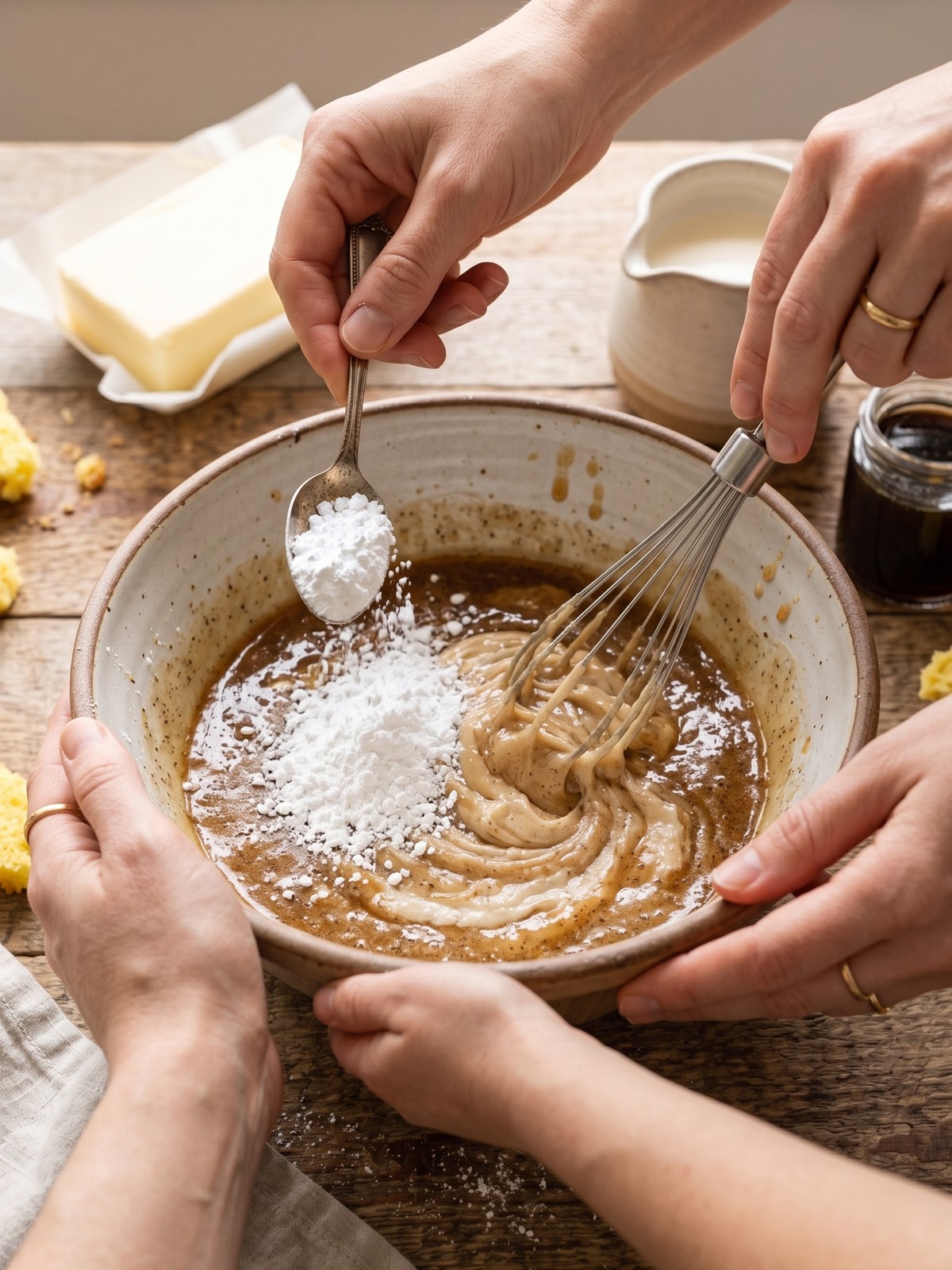
- Step 4 – Add Sugar and Flavorings: With the mixer on low, gradually add the sifted confectioners’ sugar, vanilla bean paste, and salt. Mix until combined, then increase to medium-high and beat for 2-3 minutes until light and fluffy.
- Step 5 – Adjust Consistency: Add heavy cream 1 tablespoon at a time, beating on medium after each addition, until the frosting reaches a spreadable or pipeable consistency. Scrape down the bowl as needed.
- Step 6 – Garnish and Use: If using, fold in the crumbled cake scraps by hand. Use immediately or store as directed.
How to Know It’s Done
- Butter color: The butter should be a deep golden amber with visible brown specks at the bottom and a rich, nutty smell. If it’s dark brown or black, it’s burnt.
- Frosting texture: The finished frosting should be light, creamy, and hold soft peaks. It should spread easily without tearing the cake.
- Taste test: It should taste sweet, buttery, and distinctly nutty with a hint of salt. Adjust salt or vanilla if needed.
- Consistency check: For piping, the frosting should be stiff enough to hold its shape but not so thick that it’s hard to push through a tip. Add cream or sugar as needed.
Nora’s Tips for Best Results
- I always use a thermometer to check the butter while browning; the milk solids toast best between 250°F and 300°F. Stir constantly once it starts foaming.
- If the frosting becomes too thin after adding cream, chill it for 10-15 minutes and then re-whip. It will firm up nicely.
- For the silkiest texture, I sift the confectioners’ sugar twice—once before measuring and once as I add it to the mixer.
- Don’t skip the salt; it cuts the sweetness and brings out the brown butter flavor. I prefer fine sea salt because it dissolves evenly.
- If you want a deeper caramel note, you can brown the butter until it’s a shade darker, but watch carefully to avoid burning.
Storage & Leftovers Tips
- Room temperature: The frosting can sit out for up to 2 days if covered, but it’s best used within a few hours for optimal texture.
- Refrigerator: Store in an airtight container for up to 1 week. Let it come to room temperature and re-whip before using.
- Freezer: Freeze in a sealed container for up to 3 months. Thaw overnight in the fridge, then bring to room temperature and beat until smooth again.
- Re-whipping: After storage, the frosting may separate slightly. Beat it on medium speed for 2-3 minutes, adding a teaspoon of cream if needed.
Variations & Substitutions
- Brown butter cream cheese frosting: Replace half the butter with cream cheese for a tangy twist. Beat the cream cheese separately until smooth before adding the brown butter.
- Maple brown butter frosting: Substitute the vanilla with 1 teaspoon of maple extract and reduce the cream slightly for a cozy fall flavor.
- Chocolate brown butter frosting: Add 1/2 cup of sifted cocoa powder with the confectioners’ sugar for a rich chocolate version.
- Nutty garnish: Instead of cake scraps, fold in 1/4 cup of toasted chopped pecans or hazelnuts for crunch.
- Dairy-free option: Use a high-quality vegan butter stick and replace heavy cream with canned coconut cream. The browning process works similarly.
What to Serve With Brown Butter Frosting Recipe
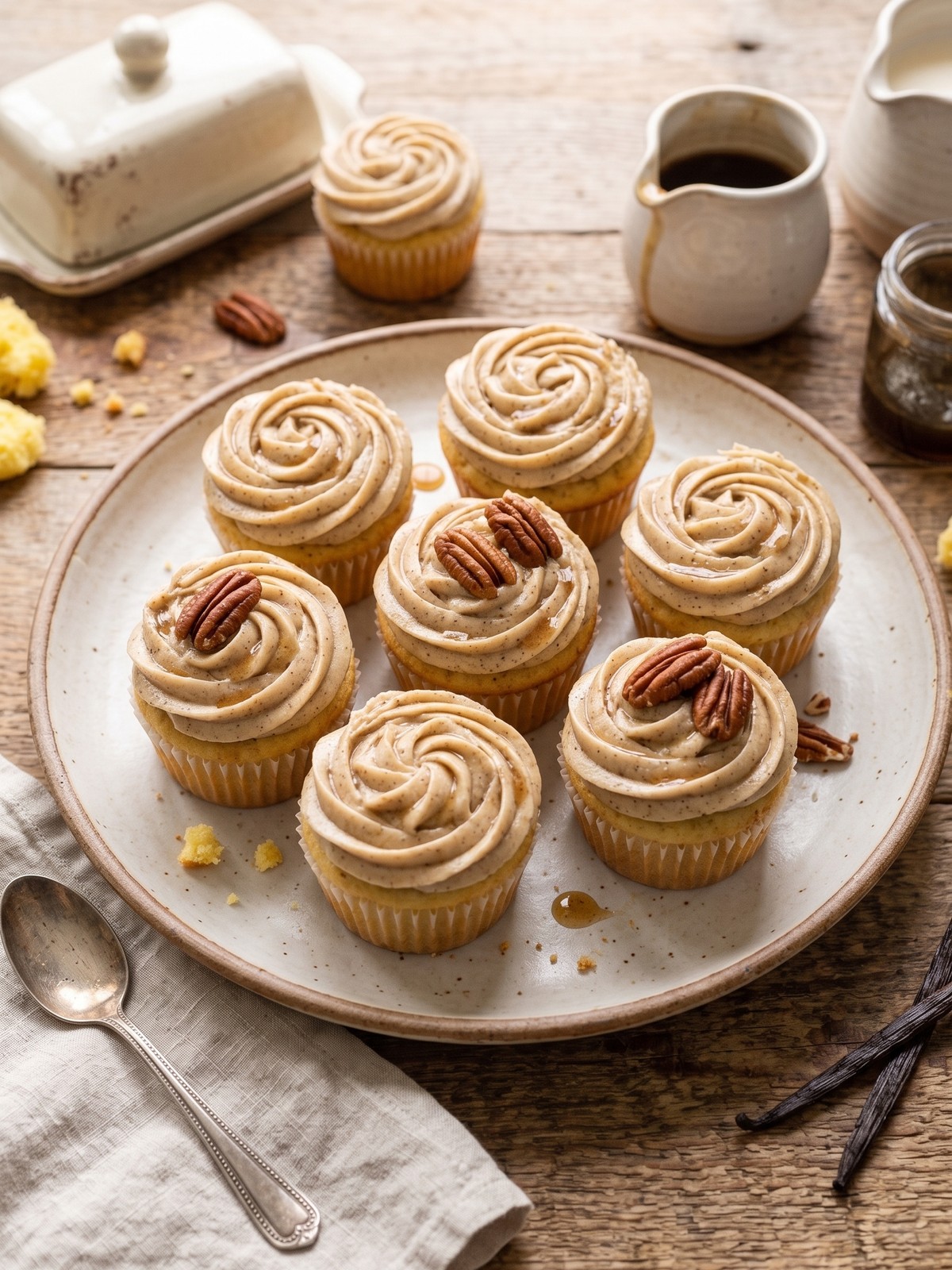
- Vanilla cake: A classic pairing—the nutty frosting complements the simple, sweet vanilla layers.
- Spice cupcakes: Cinnamon, nutmeg, and cloves in the cake bring out the warm notes in the brown butter.
- Apple cider doughnuts: Spread or pipe the frosting on top for an indulgent fall treat.
- Banana bread: A thick layer of this frosting turns a simple loaf into a dessert-worthy centerpiece.
- Gingersnap cookies: Sandwich two cookies with the frosting for a spicy-sweet bite.
FAQs
Yes, you can make it up to 3 days ahead. Store it in the fridge in an airtight container, then let it come to room temperature and re-whip before using.
Graininess usually comes from unsifted confectioners’ sugar or not beating the butter and sugar long enough. Make sure to sift the sugar and beat the frosting for at least 2-3 minutes until smooth.
Yes, but reduce the added salt to a pinch. Salted butter varies in salt content, so taste the frosting and adjust as needed.
If it’s too thin, chill it in the fridge for 10-15 minutes, then re-whip. If it’s still thin, beat in more sifted confectioners’ sugar a tablespoon at a time.
Yes, freeze it in an airtight container for up to 3 months. Thaw in the fridge overnight, then bring to room temperature and beat until smooth before using.
Brown butter frosting has a deep, nutty, caramel-like flavor from toasting the milk solids in the butter, while regular buttercream is sweeter and more straightforward.
Absolutely. Make sure the consistency is stiff enough by adding less cream or more sugar. Chill the frosted cake briefly to set the piping.
Brown Butter Frosting Recipe
Equipment
- Light-colored skillet
- Stand mixer with paddle attachment
- Heatproof bowl
- Sifter
Ingredients
- 1 cup unsalted butter high quality
- 4 cups confectioners' sugar sifted
- 1 tsp vanilla bean paste
- 1/4 tsp fine sea salt
- 2-3 tbsp heavy cream
- 1/4 cup yellow sponge cake scraps crumbled
Instructions
- Place the butter in a light-colored skillet over medium heat. Stir frequently as it melts, foams, and turns golden with brown specks and a nutty aroma, about 5-7 minutes. Immediately pour into a heatproof bowl to stop cooking.
- Let the browned butter cool at room temperature until opaque and the consistency of softened butter, about 1 hour, or chill in the fridge for 30 minutes, stirring occasionally.
- In a stand mixer with the paddle attachment, beat the cooled brown butter on medium speed until creamy and smooth, about 2 minutes.
- With the mixer on low, gradually add the sifted confectioners' sugar, vanilla bean paste, and salt. Mix until combined, then increase to medium-high and beat for 2-3 minutes until light and fluffy.
- Add heavy cream 1 tablespoon at a time, beating on medium after each addition, until the frosting reaches a spreadable or pipeable consistency. Scrape down the bowl as needed.
- If using, fold in the crumbled cake scraps by hand. Use immediately or store as directed.