
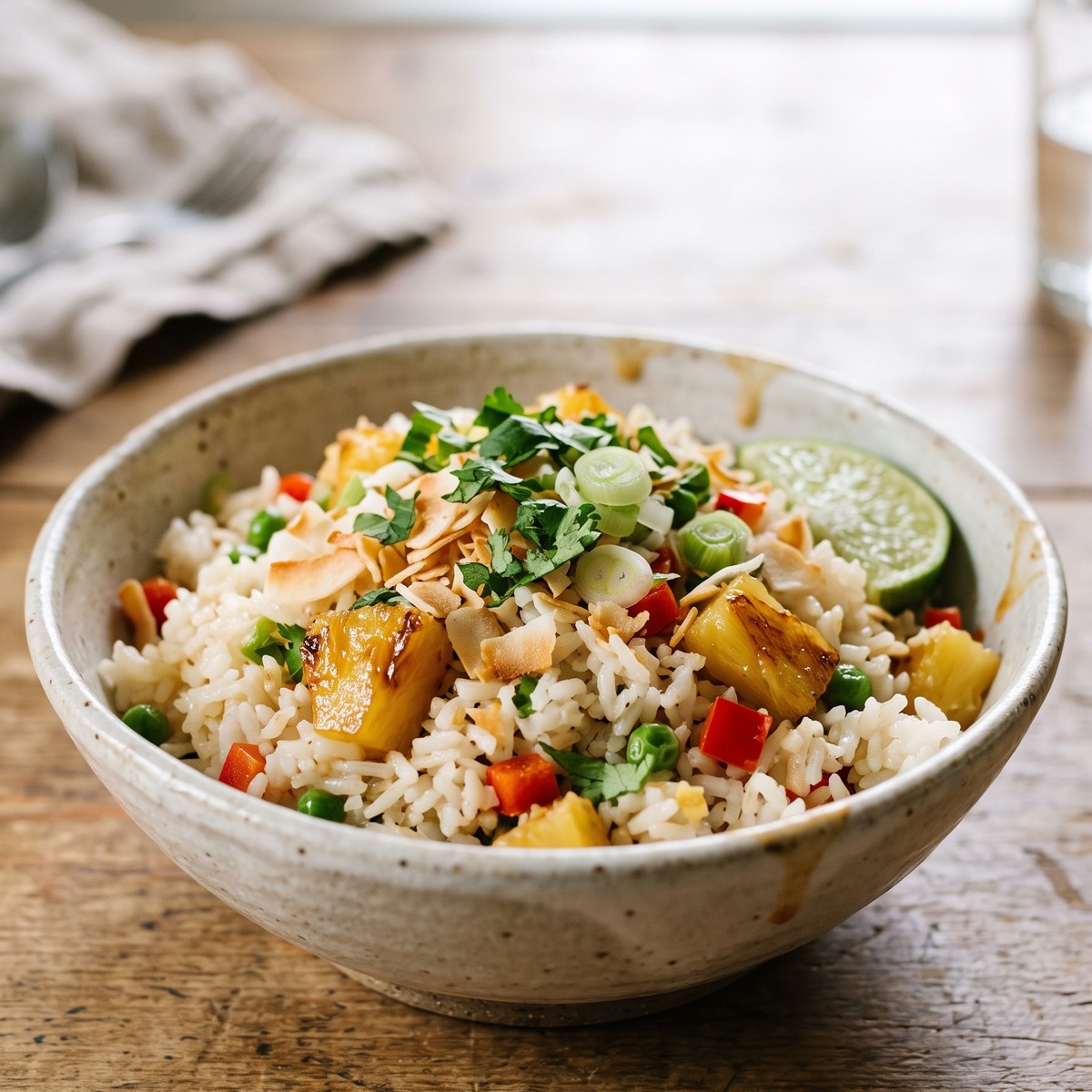
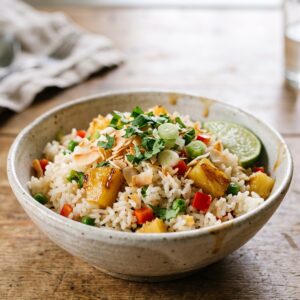
Coconut Pineapple Rice is a vibrant, creamy side dish that brings tropical flair to any meal. Fluffy jasmine rice simmers in rich coconut milk, then gets folded with juicy fresh pineapple chunks, crisp red bell pepper, and aromatic scallions. The result is a sweet-savory balance that feels both comforting and bright. It comes together in about 30 minutes with mostly hands-off simmering, making it an easy choice for weeknight dinners or summer gatherings. A sprinkle of fresh cilantro at the end adds a pop of color and freshness that ties everything together.
Why This Coconut Pineapple Rice Works
This recipe delivers restaurant-quality flavor with minimal effort. Here’s why it’s a keeper:
- One-pot simplicity: The rice cooks directly in the coconut milk mixture, absorbing all the richness without extra steps.
- Perfect sweet-savory balance: Juicy pineapple and creamy coconut milk complement savory dishes like grilled chicken or fish without overpowering them.
- Vibrant texture: Tender rice, soft pineapple, and crisp bell pepper create a satisfying contrast in every bite.
- Make-ahead friendly: The flavors meld beautifully as it sits, so you can prep it in advance for stress-free entertaining.
- Versatile base: Swap in brown rice, add a pinch of spice, or toss in extra veggies to suit your menu.
Ingredients Notes
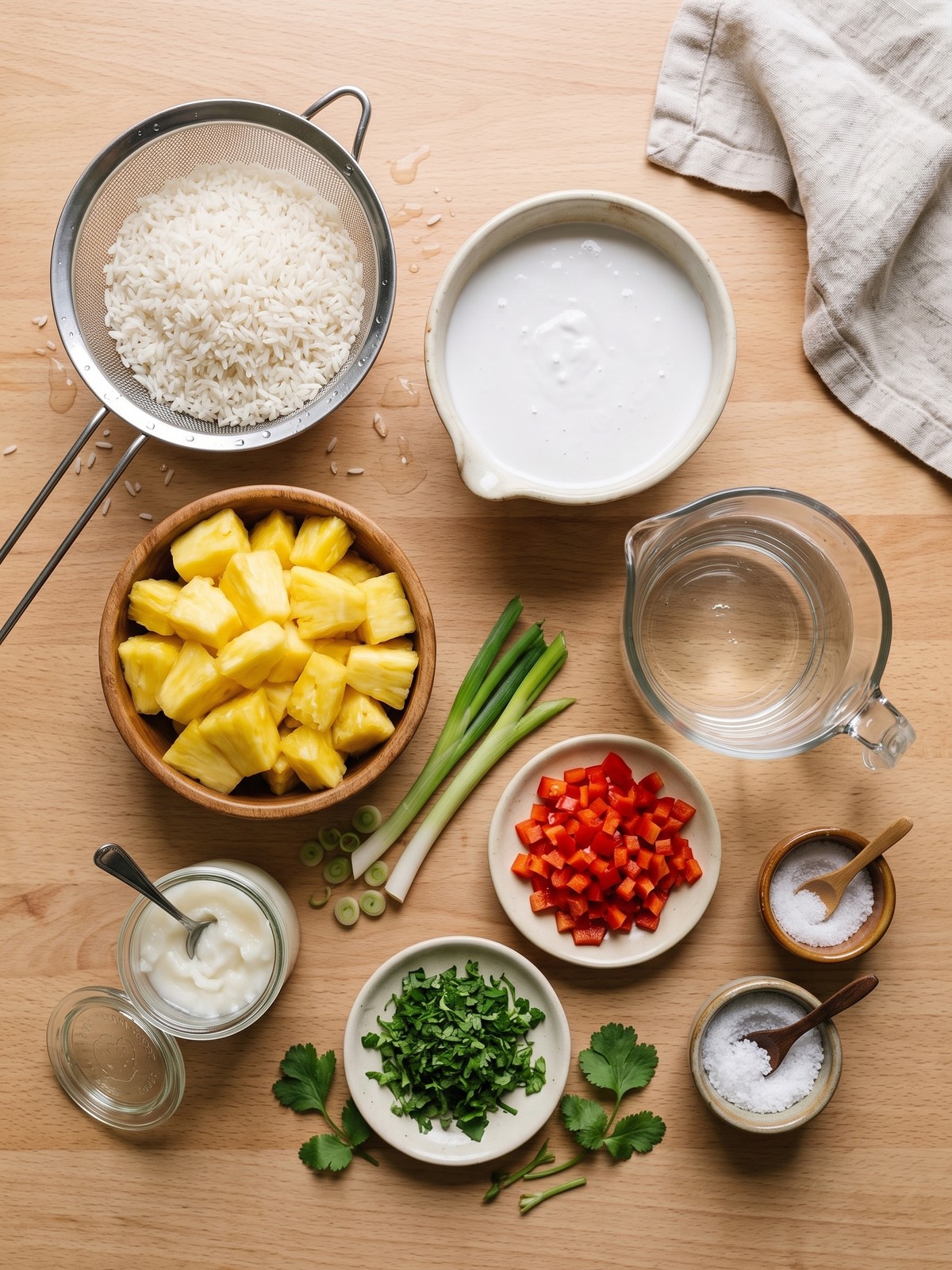
- Jasmine Rice (1.5 cups, rinsed thoroughly): Rinsing removes excess starch so the grains stay separate and fluffy, not gummy. Long-grain white rice works in a pinch, but jasmine’s floral aroma is ideal here.
- Full-Fat Coconut Milk (1 can, 400ml): Use thick, white coconut milk from a can—not the refrigerated carton kind. Full-fat gives the rice its creamy, luxurious texture. Shake the can well before opening.
- Fresh Pineapple Chunks (1.5 cups): Vibrant yellow fresh pineapple adds natural sweetness and juiciness. Canned pineapple chunks (drained) can substitute, but fresh gives the best bright flavor.
- Red Bell Pepper (0.5 cup, finely diced): Adds a mild, sweet crunch and a pop of color. Yellow or orange bell pepper works too; avoid green as it’s less sweet.
- Coconut Oil (2 tbsp): Used for sautéing, it reinforces the coconut flavor. Refined coconut oil has a neutral taste; unrefined adds more coconut aroma.
- Water or Vegetable Broth (1 cup): Broth adds a subtle savory depth, but water works perfectly to let the coconut and pineapple shine.
- Sea Salt (1 tsp): Balances the sweetness and enhances all the flavors. Adjust to taste if using salted broth.
- Fresh Cilantro (0.5 cup, chopped): A bright, herbal garnish that cuts through the richness. If you’re not a cilantro fan, fresh mint or Thai basil are great alternatives.
- Scallions (3 stalks, thinly sliced): Adds a mild oniony bite and fresh green color. Use both white and green parts for the best flavor.
Before You Begin
- Rinse the rice well: Place jasmine rice in a fine-mesh strainer and rinse under cold water until the water runs clear. This step is key for fluffy, separate grains.
- Prep all ingredients first: Dice the bell pepper, chop the pineapple into bite-sized chunks, slice the scallions, and chop the cilantro. The cooking moves quickly once the rice is simmering.
- Use a wide skillet or saucepan with a lid: A 10-inch skillet or medium saucepan with a tight-fitting lid ensures even cooking and steam retention.
- Shake the coconut milk can: The cream often separates and solidifies at the top; shaking or stirring well before measuring ensures a smooth liquid.
I always toast the rice in coconut oil for a minute before adding the liquid—it deepens the nutty flavor and helps each grain stay distinct. Just stir constantly so it doesn’t burn.
How to Make Coconut Pineapple Rice
- Step 1 – Sauté the aromatics: Heat coconut oil in a wide skillet or saucepan over medium heat. Add the diced red bell pepper and cook for 2-3 minutes until softened and fragrant, stirring occasionally.
- Step 2 – Toast the rice: Add the rinsed and drained jasmine rice to the skillet. Stir constantly for about 1 minute until the grains are well coated in oil and smell slightly nutty.
- Step 3 – Add liquids and season: Pour in the full can of coconut milk, water or broth, and sea salt. Stir to combine, then bring the mixture to a gentle boil over medium-high heat.
- Step 4 – Simmer the rice: Once boiling, reduce the heat to low, cover the skillet with a tight-fitting lid, and let it simmer for 15-18 minutes. Avoid lifting the lid during cooking to keep the steam in.
- Step 5 – Rest and fluff: Remove the skillet from heat and let it sit, covered, for 5 minutes. Then uncover and fluff the rice gently with a fork to separate the grains.
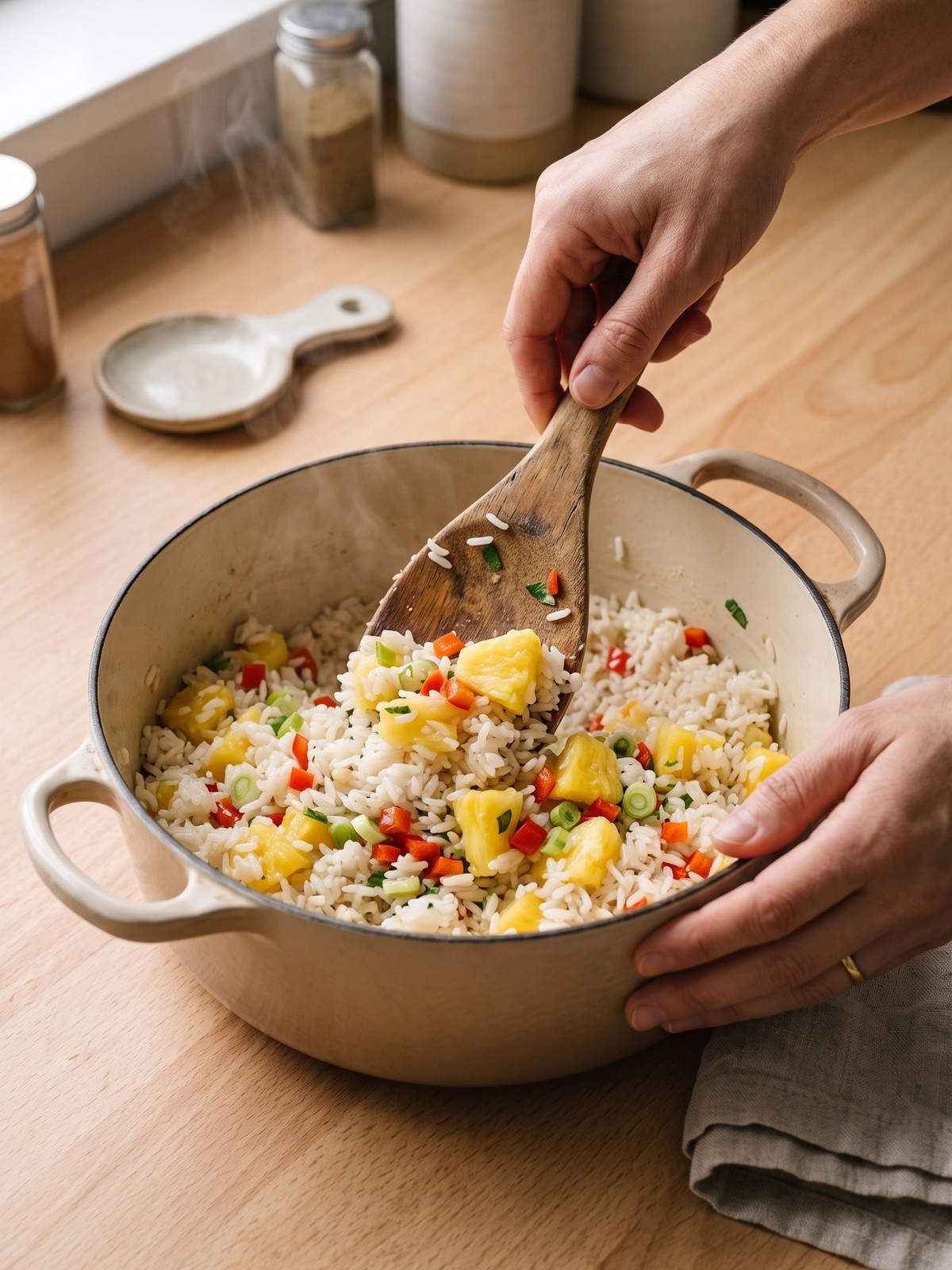
- Step 6 – Fold in pineapple and herbs: Add the fresh pineapple chunks, most of the sliced scallions (reserve some for garnish), and half the chopped cilantro. Fold everything together gently with a spatula until evenly distributed.
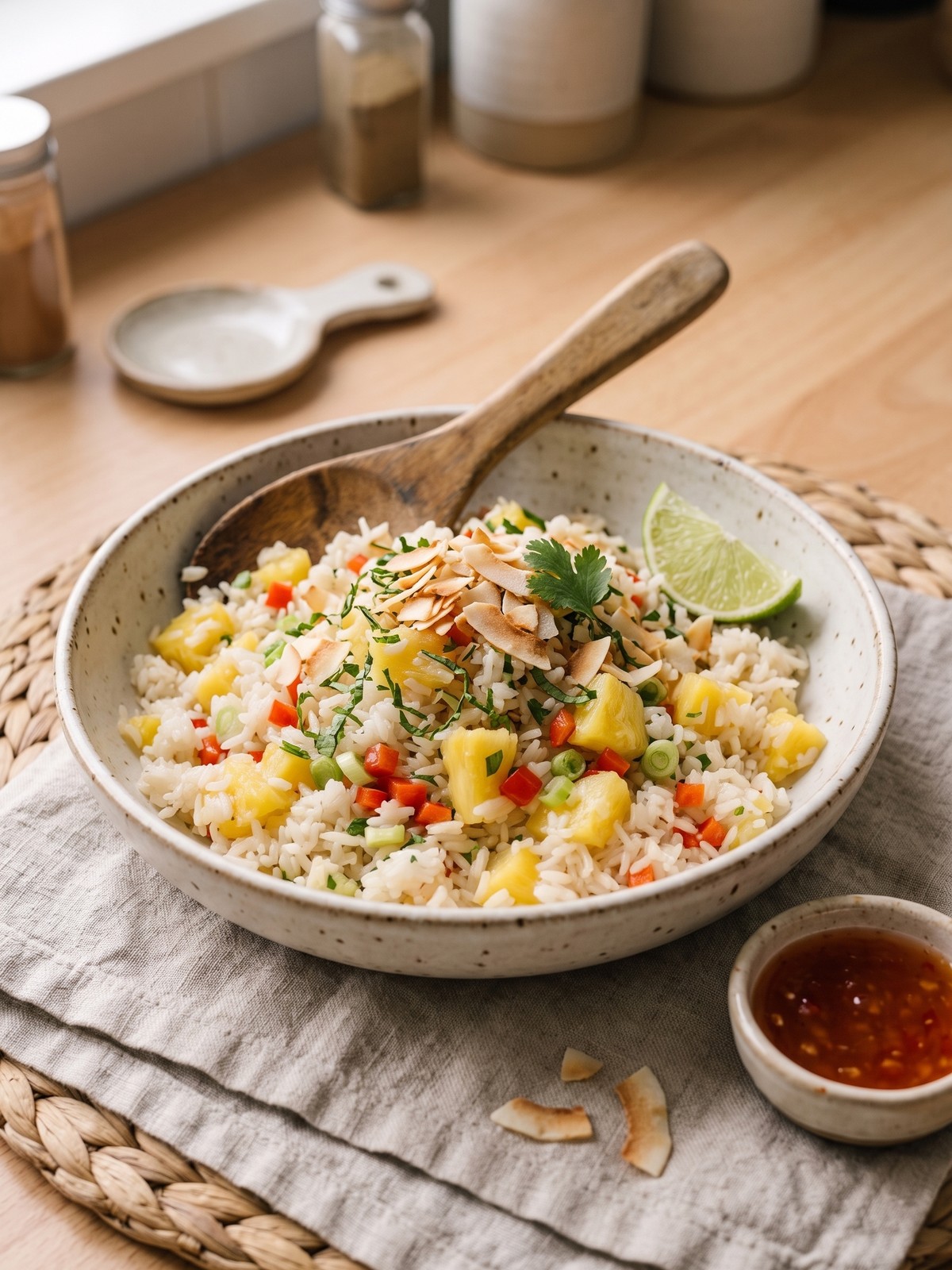
- Step 7 – Garnish and serve: Transfer to a serving bowl, top with the remaining scallions and cilantro, and serve warm.
How to Know It’s Done
- Rice tenderness: The grains should be tender but not mushy, with a slight chew at the center. If there’s still a hard core, add a splash of water and simmer for a few more minutes.
- Liquid absorption: All the liquid should be absorbed, and the bottom of the pan should be dry when you lift the rice with a fork.
- Visual cues: The rice will look plump and glossy from the coconut milk, with steam rising when you fluff it.
- Pineapple warmth: The pineapple chunks should be heated through but still hold their shape—they’ll soften slightly from the residual heat.
Nora’s Tips for Best Results
- Don’t skip the rinse: I’ve found that rinsing jasmine rice until the water runs clear is the single most important step for fluffy, non-sticky rice. It removes surface starch that can make the dish gummy.
- Use fresh pineapple when possible: Fresh pineapple has a brighter, less sugary flavor than canned, and it holds its texture better. If using canned, drain it very well and pat dry to avoid excess liquid.
- Resist peeking: Keep the lid on during the simmer and rest time. Lifting it releases steam and can lead to unevenly cooked rice.
- Fold gently: When adding the pineapple and herbs, use a folding motion rather than stirring aggressively to keep the rice grains intact.
- Adjust sweetness: If your pineapple isn’t very sweet, you can add a teaspoon of brown sugar or a drizzle of honey along with the liquids. Taste the pineapple first—often it’s sweet enough on its own.
Storage & Leftovers Tips
- Refrigerate promptly: Cool leftovers to room temperature within 2 hours, then store in an airtight container in the fridge for up to 4 days.
- Reheat gently: Warm in a skillet over medium-low heat with a splash of water or coconut milk to restore moisture. Microwave works too, but cover with a damp paper towel to prevent drying.
- Freezer option: You can freeze Coconut Pineapple Rice for up to 2 months. Portion into freezer-safe bags, press out air, and seal. Thaw overnight in the fridge before reheating.
- Texture note: The pineapple may soften further upon reheating, but the flavor remains delicious. Add a fresh sprinkle of cilantro after reheating to brighten it up.
- Food safety: Reheat to 165°F (74°C) throughout. Do not leave at room temperature for more than 2 hours total.
Variations & Substitutions
- Make it spicy: Add a minced jalapeño or a pinch of red pepper flakes when sautéing the bell pepper for a sweet-heat combo that pairs well with grilled meats.
- Add protein: Stir in cooked shrimp, shredded chicken, or cubed tofu at the end to turn this side into a complete one-pot meal.
- Swap the grain: Brown jasmine rice works well—increase the liquid by 1/4 cup and simmer for about 40 minutes. Quinoa is a faster, protein-rich alternative.
- Go nutty: Toast 1/4 cup of cashews or macadamia nuts in the coconut oil before adding the rice, then sprinkle on top for crunch.
- Herb swap: If cilantro isn’t your thing, use fresh mint, Thai basil, or a mix of both for a different herbal note.
- Lighter version: Use light coconut milk for a less rich dish, though the texture won’t be as creamy. Add a tablespoon of coconut cream if you have it.
What to Serve With Coconut Pineapple Rice
- Grilled chicken thighs: The smoky char and juicy meat are a perfect match for the sweet, creamy rice. Try a simple lime and garlic marinade.
- Pan-seared salmon: A crispy-skinned salmon fillet with a ginger-soy glaze complements the tropical flavors beautifully.
- Jerk shrimp skewers: Spicy, aromatic shrimp bring a Caribbean vibe that pairs naturally with coconut and pineapple.
- Black bean salad: A simple side of black beans, corn, and avocado adds protein and freshness for a vegetarian plate.
- Grilled pineapple slices: Double down on the pineapple theme with caramelized grilled rings—serve them alongside or on top.
- Cucumber mint raita: A cooling yogurt-based condiment balances the richness of the coconut rice and adds a refreshing element.
FAQs
Yes, canned pineapple chunks work well. Drain them thoroughly and pat dry with paper towels to remove excess syrup or juice, which can make the rice soggy. Fresh pineapple is preferred for its brighter flavor and firmer texture.
Yes, Coconut Pineapple Rice is naturally vegan when made with water or vegetable broth, and it’s gluten-free as long as all packaged ingredients (like broth) are certified gluten-free. Always check labels to be sure.
Absolutely. Sauté the bell pepper in a separate pan, then add it to the rice cooker with the rinsed rice, coconut milk, water, and salt. Use the white rice setting. Once done, fold in the pineapple and herbs.
Rinse the rice thoroughly until the water runs clear, use the correct liquid-to-rice ratio, and avoid lifting the lid during cooking. Letting it rest off heat for 5 minutes also helps the grains firm up.
For a similar creamy texture, you can use cashew cream or a blend of almond milk with a tablespoon of coconut cream. The flavor will be less coconutty, so consider adding a drop of coconut extract if desired.
Definitely. Diced carrots, peas, or corn add color and sweetness. Sauté firmer veggies with the bell pepper, and stir in quick-cooking ones like peas at the end with the pineapple.
You can prepare it up to 2 days ahead and store it in the fridge. The flavors meld nicely, but the pineapple may soften slightly. Reheat gently and add fresh herbs before serving.
Coconut Pineapple Rice
Equipment
- 10-inch skillet or medium saucepan with lid
- Fine-mesh strainer
- Measuring cups and spoons
- Spatula or wooden spoon
Ingredients
- 1.5 cups jasmine rice rinsed thoroughly
- 1 can full-fat coconut milk 400ml
- 1.5 cups fresh pineapple chunks
- 0.5 cup red bell pepper finely diced
- 2 tbsp coconut oil
- 1 cup water or vegetable broth
- 1 tsp sea salt
- 0.5 cup fresh cilantro chopped
- 3 stalks scallions thinly sliced
Instructions
- Heat coconut oil in a wide skillet over medium heat. Add diced red bell pepper and sauté for 2-3 minutes until softened.
- Add rinsed jasmine rice and stir constantly for 1 minute until grains are coated and fragrant.
- Pour in coconut milk, water or broth, and sea salt. Stir, then bring to a gentle boil over medium-high heat.
- Reduce heat to low, cover with a tight-fitting lid, and simmer for 15-18 minutes without lifting the lid.
- Remove from heat and let rest, covered, for 5 minutes. Uncover and fluff rice with a fork.
- Gently fold in pineapple chunks, most of the scallions, and half the cilantro until evenly distributed.
- Transfer to a serving bowl, garnish with remaining scallions and cilantro, and serve warm.