
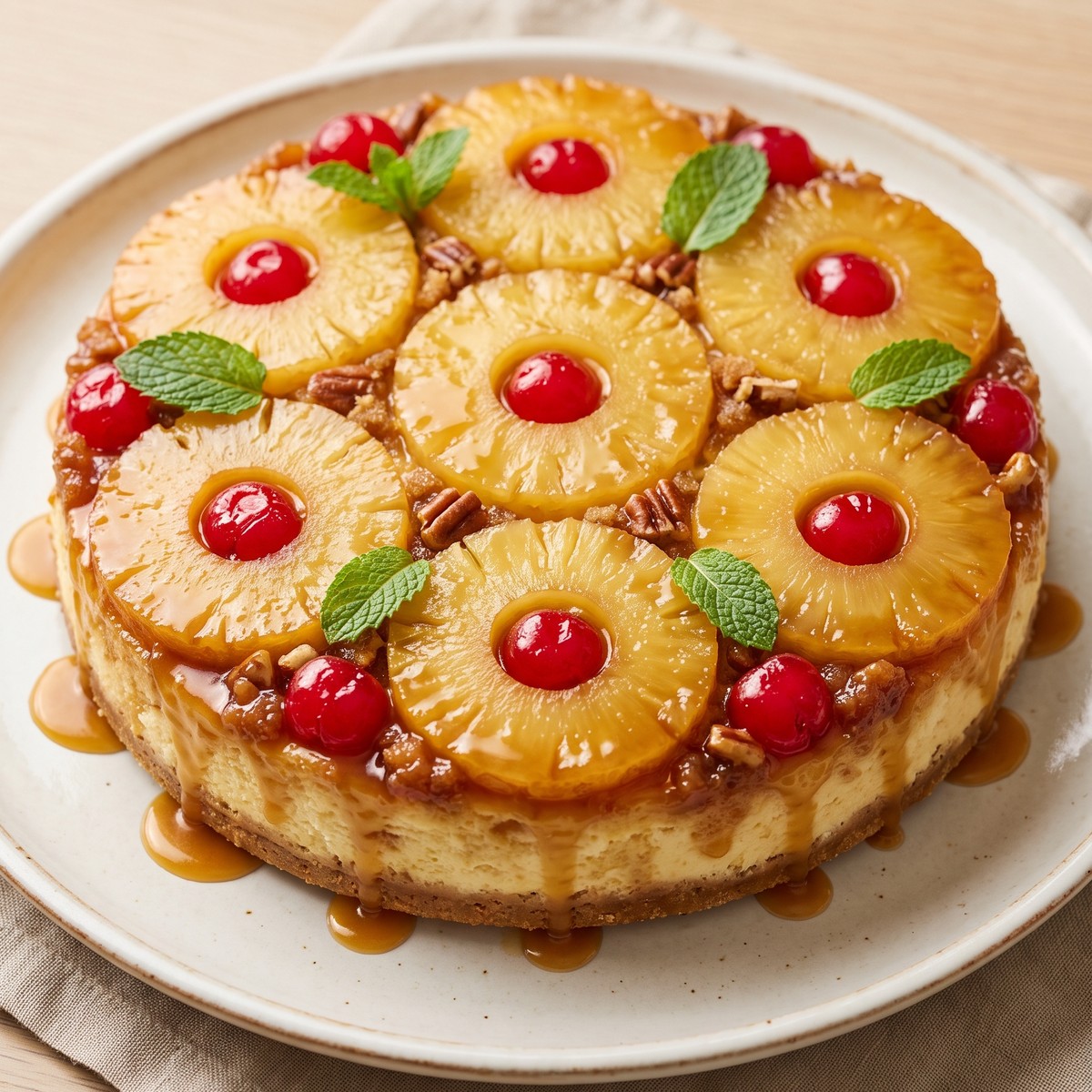
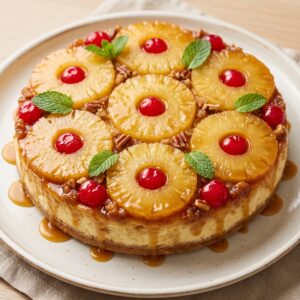
Pineapple Upside-Down Cheesecake is a show-stopping dessert that layers a buttery brown sugar caramelized pineapple topping, a smooth and tangy cheesecake center, and a soft yellow sponge cake base. The combination of sweet tropical fruit, rich cream cheese, and tender vanilla cake creates a dessert that feels both nostalgic and elegantly modern. This recipe requires some chilling time to set the cheesecake layer perfectly, but the hands-on prep is straightforward, and the result is a stunning cake that slices cleanly to reveal beautiful pineapple rings and bright cherries.
Why This Pineapple Upside-Down Cheesecake Works
This recipe delivers a dessert that’s as impressive to look at as it is delicious to eat. Here’s why it’s a keeper:
- Three distinct layers: The caramelized pineapple top, creamy cheesecake middle, and fluffy sponge cake bottom create a perfect balance of textures and flavors in every bite.
- Make-ahead friendly: The cheesecake needs time to chill and set, which means you can prepare it a day ahead and have dessert ready when you need it.
- No water bath needed: Unlike traditional cheesecakes, this one bakes on top of a cake layer, so you don’t have to fuss with foil wraps or water baths.
- Visually stunning: The classic pineapple ring and cherry pattern makes this cake a centerpiece-worthy dessert for holidays, potlucks, and summer parties.
- Balanced sweetness: The tangy cream cheese and sour cream cut through the caramelized sugar and sweet pineapple, so the cake never feels cloying.
Ingredients Notes
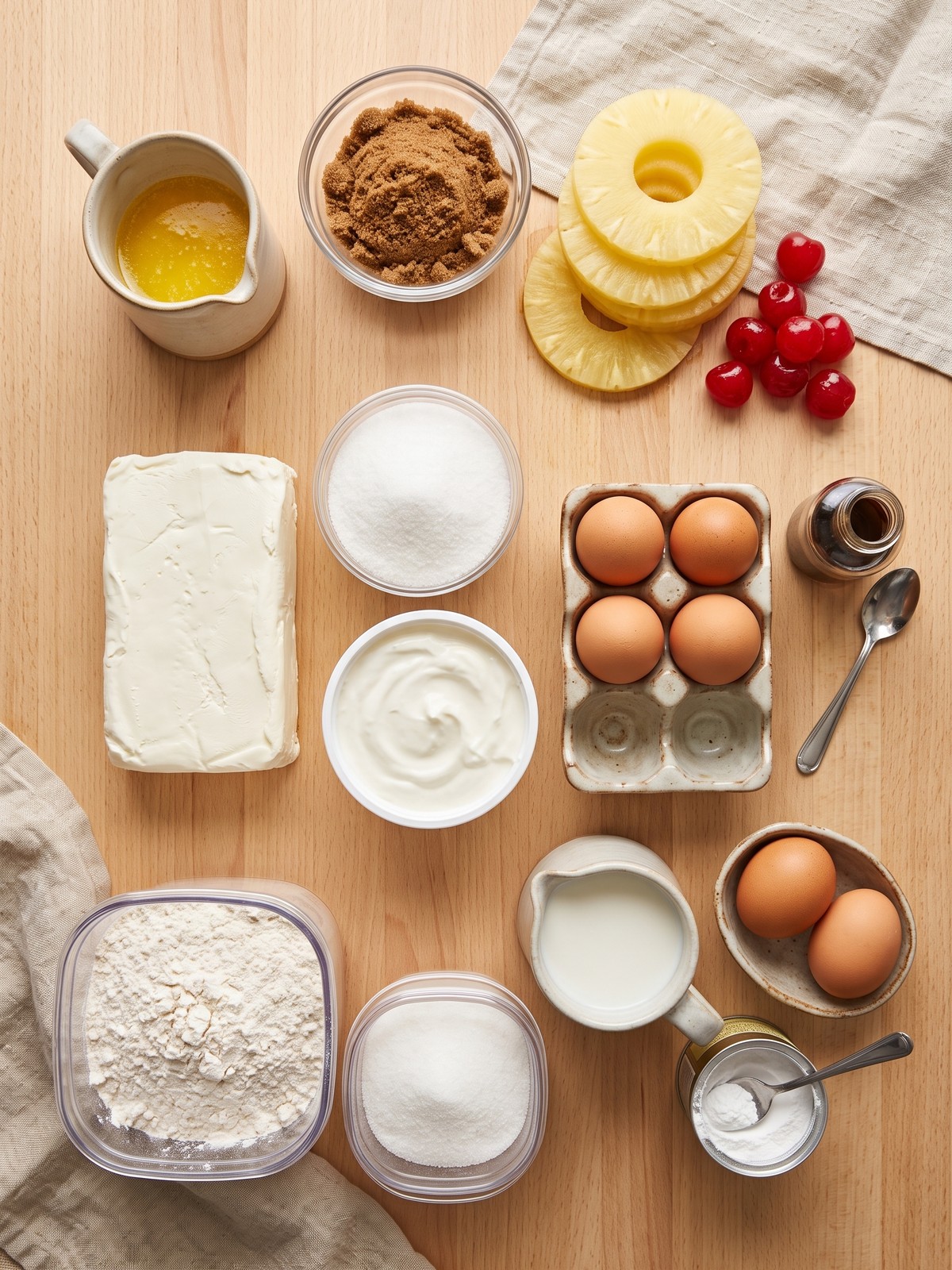
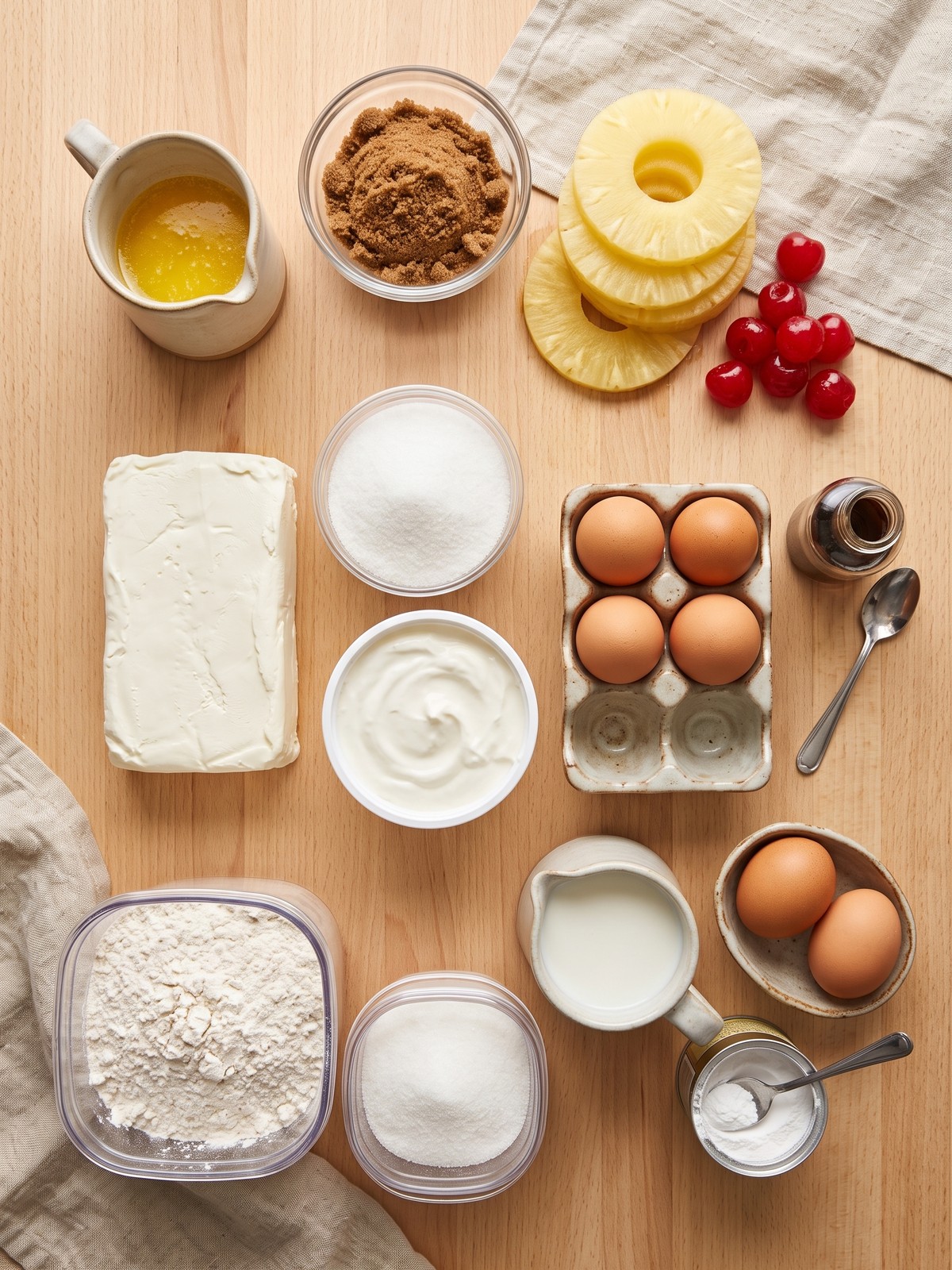
- Salted Butter (1/2 cup, melted): Using salted butter in the caramelized pineapple layer adds a subtle savory note that balances the sweetness. If you only have unsalted butter, add a pinch of salt.
- Dark Brown Sugar (1 cup, packed): Dark brown sugar gives the topping a deeper molasses flavor and richer color. Light brown sugar works in a pinch, but the caramel won’t be quite as robust.
- Canned Pineapple Rings (20 oz, drained and patted dry): Draining and drying the pineapple rings is essential to prevent excess liquid from seeping into the cheesecake layer. Save the juice for another use.
- Maraschino Cherries (7 whole, patted dry): Classic for that retro look, but you can substitute fresh or frozen cherries if you prefer. Just make sure they’re dry so they don’t bleed color.
- Cream Cheese (32 oz, full-fat, softened): Full-fat block cream cheese is non-negotiable for a creamy, stable cheesecake. Let it soften at room temperature for at least an hour before mixing.
- Granulated Sugar (1 cup): Standard white sugar sweetens the cheesecake without adding extra moisture or flavor that could compete with the pineapple.
- Sour Cream (1 cup, full-fat): Sour cream adds tang and a silky texture. Full-fat is best, but plain Greek yogurt can work in a pinch.
- Eggs (3 large, room temperature): Room-temperature eggs blend more evenly and help prevent the cheesecake from cracking. Take them out of the fridge about 30 minutes before you start.
- Vanilla Extract (1 tbsp): A full tablespoon gives the cheesecake and cake layers a warm, aromatic vanilla flavor that ties everything together.
- All-Purpose Flour (1.5 cups): This forms the structure of the sponge cake. Measure by spooning into the cup and leveling off for accuracy.
- Granulated Sugar (1 cup, for cake): Another cup of sugar sweetens the cake layer. It also helps create a tender crumb.
- Whole Milk (1/2 cup): Whole milk adds richness and moisture to the cake. 2% works, but the cake may be slightly less tender.
- Eggs (2 large, for cake): These provide structure and lift for the sponge layer. Room temperature is ideal here too.
- Baking Powder (1.5 tsp): This leavening agent gives the cake its light, airy texture. Make sure it’s fresh for the best rise.
Before You Begin
- Springform pan prep: Use a 9-inch springform pan. Grease it well and line the bottom with parchment paper to make unmolding easier.
- Room temperature ingredients: Take the cream cheese, sour cream, and all eggs out of the fridge at least 1 hour before you start. Cold ingredients can lead to a lumpy cheesecake batter.
- Oven temperature: Preheat your oven to 325°F (163°C). An oven thermometer helps ensure accuracy, which is important for even baking.
- Pineapple prep: Drain the pineapple rings thoroughly and pat them very dry with paper towels. Excess moisture can create a soggy layer between the pineapple and cheesecake.
For the cleanest slices, chill the fully baked and cooled cheesecake overnight before removing the springform ring. I usually run a thin knife around the edge first, then release the clasp slowly.
How to Make Pineapple Upside-Down Cheesecake
- Step 1 – Prepare the caramelized pineapple layer: Pour the melted butter into the bottom of the prepared springform pan. Sprinkle the dark brown sugar evenly over the butter. Arrange the pineapple rings in a single layer on top of the sugar, then place a cherry in the center of each ring and in any gaps. Set the pan aside.
- Step 2 – Make the cheesecake batter: In a large bowl, beat the softened cream cheese and sugar with an electric mixer on medium speed until completely smooth and creamy, about 2-3 minutes. Scrape down the bowl. Add the sour cream and vanilla extract, and mix until just combined. Add the eggs one at a time, mixing on low speed after each addition just until the yolk disappears. Do not overmix.
- Step 3 – Assemble the cheesecake layer: Carefully spoon the cheesecake batter over the pineapple layer in the springform pan. Use a spatula to gently spread it into an even layer, taking care not to disturb the pineapple arrangement underneath.
- Step 4 – Prepare the sponge cake batter: In a medium bowl, whisk together the flour and baking powder. In a separate large bowl, beat the eggs and sugar with an electric mixer on high speed until thick and pale, about 3 minutes. Reduce the speed to low and mix in the milk and vanilla. Gradually add the flour mixture, mixing just until no streaks remain.
- Step 5 – Add the cake layer and bake: Pour the cake batter over the cheesecake layer and spread it gently to the edges. Place the springform pan on a baking sheet to catch any potential drips. Bake for 70-80 minutes, or until the top is golden brown and the center jiggles only slightly when gently shaken.
- Step 6 – Cool and chill: Turn off the oven, crack the door open, and let the cheesecake cool inside for 1 hour. Then remove it from the oven and let it cool completely at room temperature. Once cool, cover with plastic wrap and refrigerate for at least 6 hours, preferably overnight.
- Step 7 – Unmold and serve: Run a thin knife around the edge of the pan. Release the springform clasp and lift off the ring. Place a serving plate over the cake and carefully invert it. Remove the pan bottom and parchment paper. Slice with a sharp knife, wiping the blade clean between cuts.
How to Know It’s Done
- Jiggle test: The cheesecake is done when the center still has a slight wobble—like set Jell-O—but the edges are firm and the top is golden brown.
- Visual cues: The cake layer on top should be evenly golden and spring back lightly when pressed. The pineapple layer underneath will be bubbling around the edges.
- Internal temperature: For the most accurate check, insert an instant-read thermometer into the center of the cheesecake layer. It should read 150°F (65°C).
- Cooling patience: The cheesecake will continue to set as it cools and chills. Don’t rush the cooling process, or the layers may separate when you unmold it.
Nora’s Tips for Best Results
- Beat cream cheese thoroughly: I always beat the cream cheese and sugar until it’s completely lump-free before adding other ingredients. Any tiny lumps now will stay in the finished cheesecake.
- Don’t overmix after adding eggs: Overmixing the eggs can whip too much air into the batter, which may cause the cheesecake to puff and crack during baking. Mix on low just until incorporated.
- Use a water bath alternative: Placing a shallow pan of hot water on the lower oven rack adds steam and helps prevent the cheesecake from cracking, without the hassle of wrapping the springform pan.
- Chill thoroughly: The cheesecake needs at least 6 hours in the fridge to set properly. I prefer overnight for the cleanest slices and best texture.
- Invert with confidence: When flipping the cake onto a serving plate, do it in one smooth motion. If any pineapple sticks to the pan, just lift it off with a spatula and place it back on the cake.
Storage & Leftovers Tips
- Refrigerate: Store leftover cheesecake covered in the refrigerator for up to 5 days. Keep it in an airtight container or wrap the cake plate tightly with plastic wrap.
- Freeze: You can freeze the whole cheesecake or individual slices. Wrap tightly in plastic wrap, then foil, and freeze for up to 2 months. Thaw overnight in the fridge.
- Reheating: This cake is served cold, so no reheating is needed. If you prefer it closer to room temperature, let slices sit out for 15-20 minutes before serving.
- Texture note: The sponge cake layer may absorb a bit of moisture from the cheesecake over time, but it will still taste delicious. The pineapple topping stays glossy and flavorful.
Variations & Substitutions
- Different fruit: Swap the pineapple rings for canned peach halves or sliced pears. The caramelized brown sugar topping works beautifully with many fruits.
- Gluten-free option: Replace the all-purpose flour with a 1:1 gluten-free flour blend. The cake texture will be slightly different but still tender.
- Lighter version: Use Neufchâtel cheese instead of full-fat cream cheese and light sour cream. The cheesecake will be a bit less rich but still creamy.
- Boozy twist: Add 1 tablespoon of dark rum or coconut rum to the cheesecake batter for a tropical flavor boost. You can also brush the cooled cake layer with a rum simple syrup.
- Nutty crunch: Sprinkle 1/4 cup of toasted chopped pecans or macadamia nuts over the brown sugar before adding the pineapple for extra texture and flavor.
What to Serve With Pineapple Upside-Down Cheesecake
- Whipped cream: A dollop of lightly sweetened whipped cream adds a cool, airy contrast to the dense, creamy cheesecake.
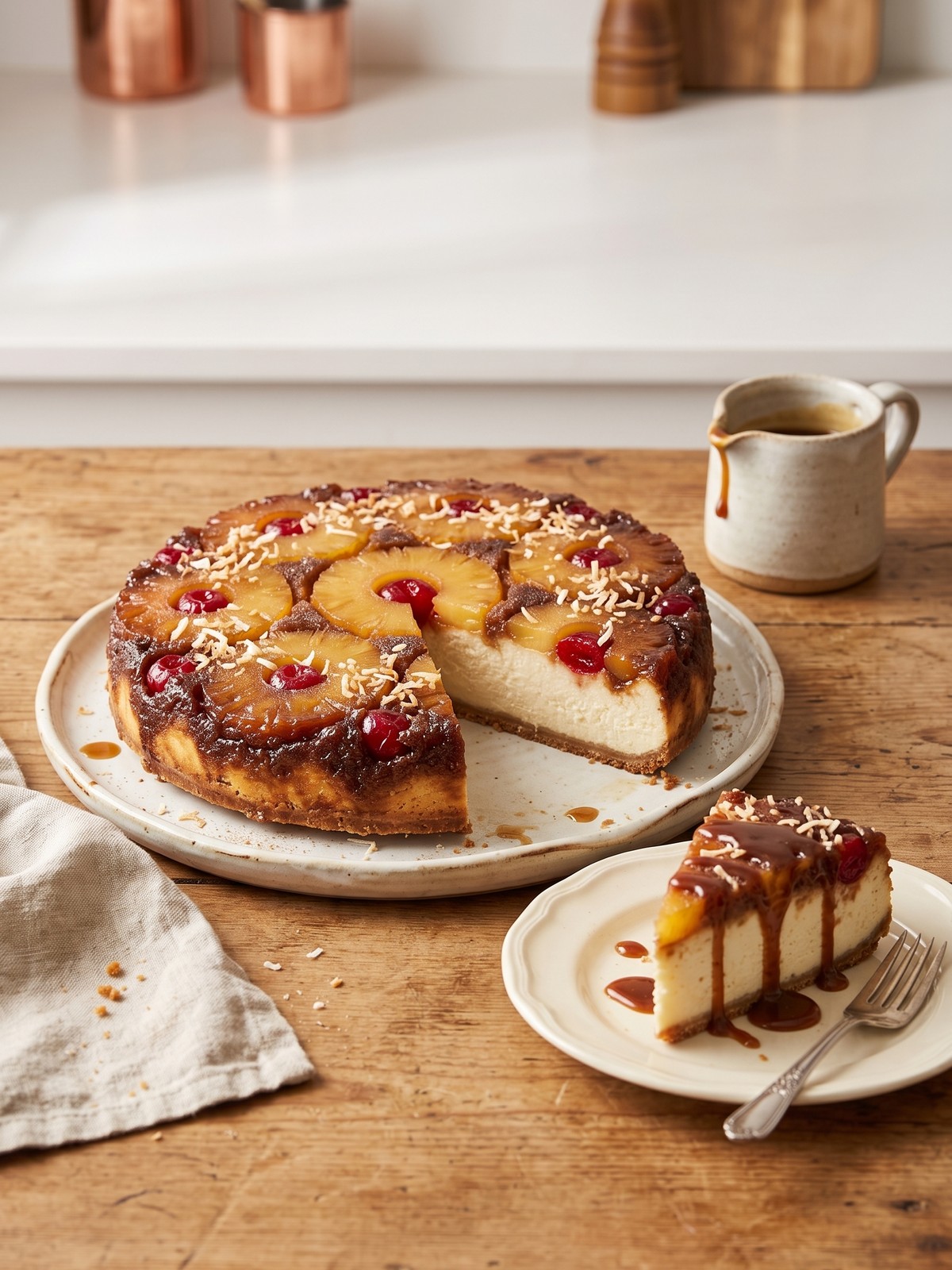
- Toasted coconut: Sprinkle toasted coconut flakes over the top for a tropical touch that complements the pineapple.
- Caramel sauce: A drizzle of warm caramel sauce over each slice enhances the brown sugar notes and makes it extra decadent.
- Fresh berries: A side of fresh raspberries or sliced strawberries adds a bright, tart pop that cuts through the richness.
- Iced coffee or tea: The slight bitterness of iced coffee or black tea balances the sweetness of the cake perfectly for a summer dessert.
FAQs
Fresh pineapple can be used, but it contains an enzyme called bromelain that can break down the cheesecake’s protein structure and cause a mushy texture. Canned pineapple is heat-processed, which deactivates the enzyme, making it the safer choice for this recipe.
Cheesecakes can crack from overmixing the batter, sudden temperature changes, or overbaking. To help prevent cracks, mix the eggs in on low speed, cool the cake gradually in the oven with the door cracked, and avoid opening the oven door during baking.
Yes, this cheesecake is perfect for making ahead. It needs at least 6 hours to chill, but overnight is even better. You can bake and chill it up to 2 days in advance, then unmold and serve when ready.
For clean slices, use a sharp, thin-bladed knife and wipe it clean with a damp paper towel between each cut. Chilling the cheesecake thoroughly also helps it slice neatly without smearing the layers.
Absolutely. Wrap the whole cheesecake or individual slices tightly in plastic wrap and then foil. Freeze for up to 2 months. Thaw overnight in the refrigerator before serving.
A springform pan is ideal because it allows you to unmold the cake easily. If you don’t have one, you can use a deep 9-inch round cake pan lined with parchment paper, but unmolding will be trickier. You may need to serve it directly from the pan.
A dense cake layer can result from overmixing the batter once the flour is added, or from using cold ingredients. Mix the flour in just until combined, and make sure your eggs and milk are at room temperature for the lightest texture.
Pineapple Upside-Down Cheesecake
Equipment
- 9-inch springform pan
- Electric mixer
- Mixing bowls
- Spatula
- Baking sheet
Ingredients
- 1/2 cup salted butter melted
- 1 cup dark brown sugar packed
- 20 oz canned pineapple rings drained and patted dry
- 7 whole maraschino cherries patted dry
- 32 oz full-fat cream cheese softened
- 1 cup granulated sugar
- 1 cup full-fat sour cream
- 3 large eggs room temperature
- 1 tbsp vanilla extract
- 1.5 cups all-purpose flour
- 1 cup granulated sugar
- 1/2 cup whole milk
- 2 large eggs
- 1.5 tsp baking powder
Instructions
- Preheat oven to 325°F (163°C). Grease a 9-inch springform pan and line the bottom with parchment paper.
- Pour melted butter into the prepared pan. Sprinkle brown sugar evenly over the butter. Arrange pineapple rings in a single layer, then place a cherry in the center of each ring and in any gaps.
- In a large bowl, beat cream cheese and 1 cup sugar until smooth. Add sour cream and vanilla; mix until combined. Add 3 eggs one at a time, mixing on low after each just until blended. Pour over pineapple layer and spread evenly.
- In a medium bowl, whisk flour and baking powder. In another bowl, beat 2 eggs and 1 cup sugar until thick and pale. Mix in milk and vanilla. Gradually add flour mixture, mixing just until combined. Pour over cheesecake layer and spread gently.
- Place springform pan on a baking sheet. Bake for 70-80 minutes, until top is golden and center jiggles slightly. Turn off oven, crack door, and let cool inside for 1 hour. Remove and cool completely at room temperature.
- Cover and refrigerate for at least 6 hours, preferably overnight. Run a knife around the edge, release the springform, invert onto a serving plate, and remove the pan bottom and parchment. Slice and serve.