
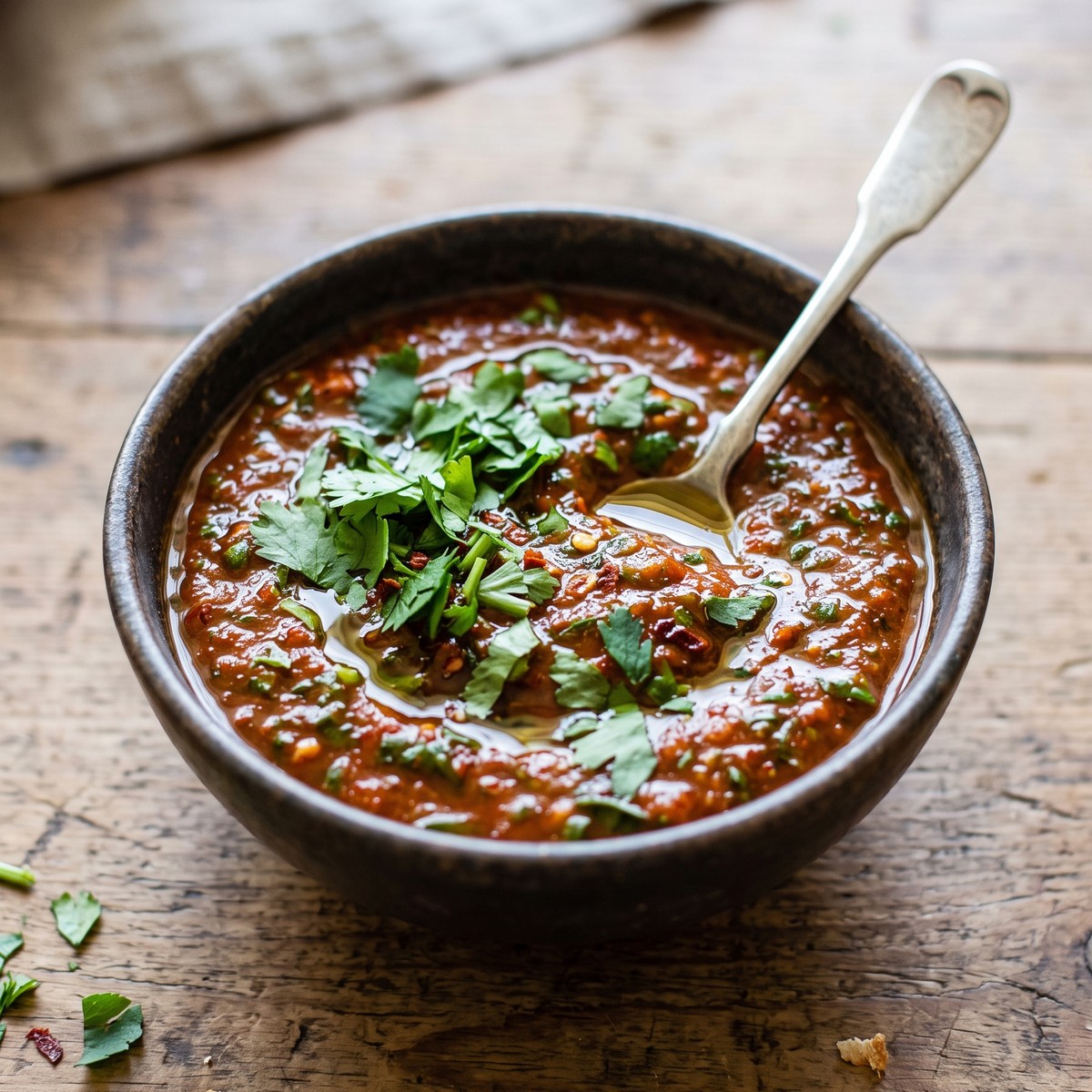
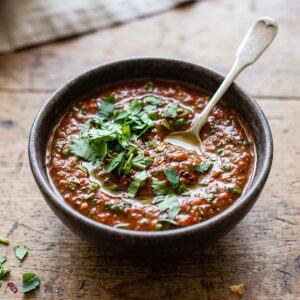
Smoky Red Chimichurri Sauce is a vibrant, no-cook condiment that swaps the classic green version for a deeper, roasted pepper base. Finely chopped roasted red bell peppers bring a subtle sweetness and smoky edge, while fresh parsley, oregano, garlic, and a kick of red chili flakes keep it bright and punchy. A generous pour of olive oil and red wine vinegar pulls everything into a spoonable sauce that tastes even better after a short rest. It’s the kind of sauce you’ll want to drizzle over grilled steak, spoon onto roasted vegetables, or stir into grain bowls all week long.
Why This Smoky Red Chimichurri Sauce Works
This sauce delivers big flavor with minimal effort and a handful of pantry-friendly ingredients.
- Deep, smoky flavor without a grill: Roasted red peppers give you that fire-kissed taste straight from the jar, so you can enjoy smoky depth any time of year.
- Fresh herbs keep it bright: Flat-leaf parsley and oregano add a clean, grassy contrast that stops the sauce from feeling heavy.
- Perfect make-ahead condiment: The flavors meld and improve after 30 minutes at room temperature, making it ideal for meal prep or entertaining.
- Versatile beyond steak: Spoon it over chicken, fish, roasted veggies, eggs, or even crusty bread for an instant flavor boost.
- Adjustable heat level: Control the chili flakes to keep it mild or turn up the warmth to suit your crowd.
- No special equipment needed: Just a sharp knife and a mixing bowl—no blender or food processor required for the best chunky texture.
Ingredients Notes
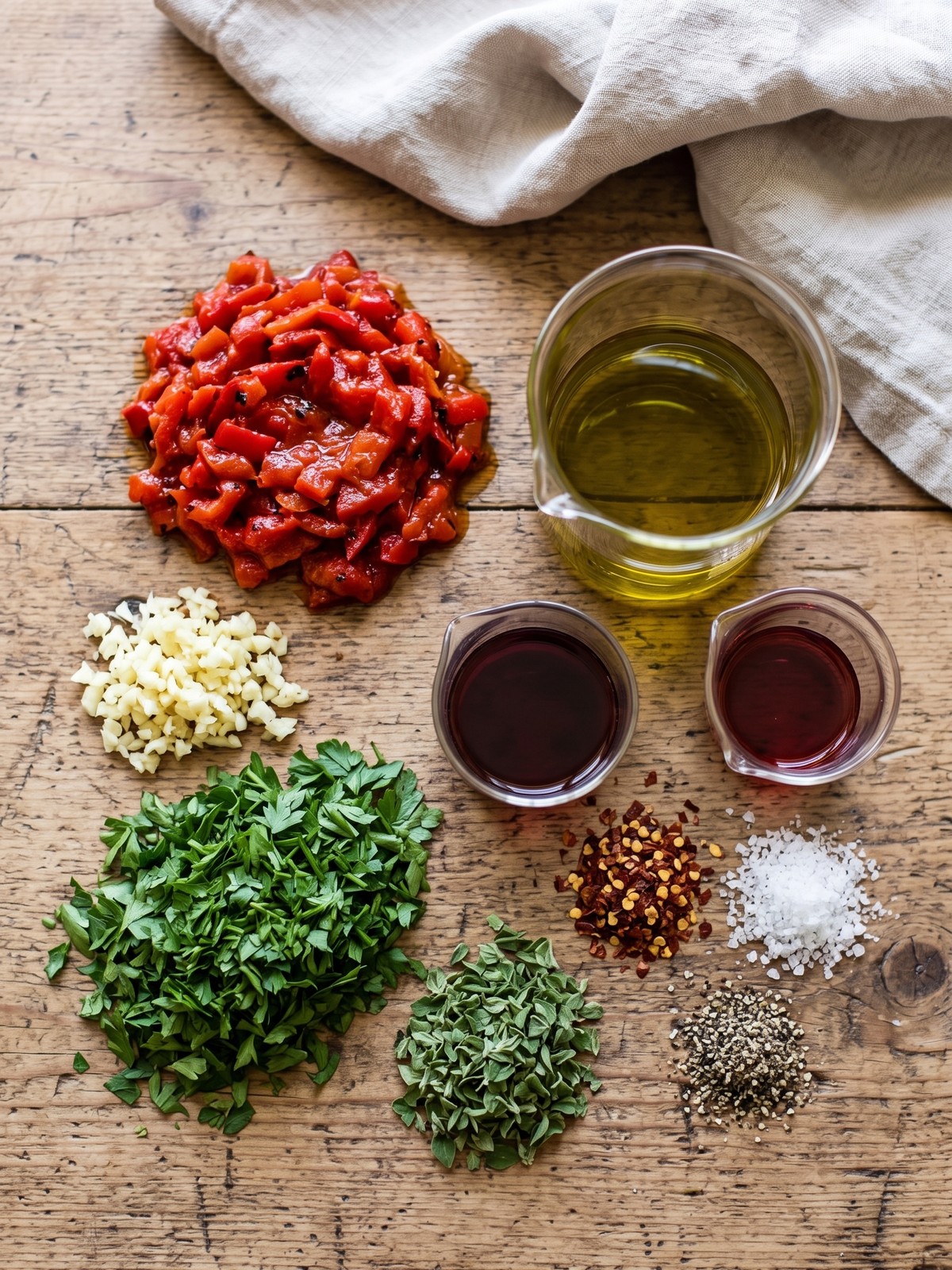
- Roasted red bell peppers (1 cup, finely chopped): Jarred roasted red peppers work beautifully here. Pat them dry with paper towels before chopping so the sauce doesn’t get watery. If you have time, fire-roast your own peppers for an even smokier result.
- Fresh garlic (4 cloves, minced): Use fresh cloves, not the pre-minced jarred kind, for the sharp, aromatic bite that defines chimichurri. I usually grate mine on a microplane so it melts right into the oil.
- Fresh flat-leaf parsley (1 cup, finely chopped): Flat-leaf parsley has a cleaner, more peppery flavor than curly. Wash and dry it thoroughly, then chop by hand for the best texture.
- Fresh oregano (2 tbsp, chopped): Fresh oregano adds an earthy, slightly minty note. If you must substitute, use 2 teaspoons dried oregano, but fresh really makes a difference here.
- Dried red chili flakes (1 tsp): This brings a gentle, warming heat. Use less for a milder sauce or swap in a pinch of cayenne for a sharper kick.
- Extra virgin olive oil (3/4 cup): Choose a good-quality, fruity olive oil since it’s the backbone of the sauce. Avoid anything too grassy or bitter.
- Red wine vinegar (1/4 cup): This gives the sauce its signature tang. Sherry vinegar or white wine vinegar can work in a pinch, but red wine vinegar is classic.
- Coarse sea salt (1 tsp) and cracked black pepper (1/2 tsp): Season generously. The salt helps draw moisture from the herbs and peppers, creating a more cohesive sauce as it sits.
Before You Begin
- Dry your peppers well: Excess moisture from jarred roasted peppers can make the sauce thin. Spread them on paper towels and pat dry before chopping.
- Chop everything by hand: A food processor will turn this into a paste. For the signature chunky, spoonable texture, use a sharp chef’s knife and chop the peppers, parsley, and oregano finely but not into a purée.
- Let it rest: Plan to make the sauce at least 30 minutes before serving. The resting time allows the garlic and chili to mellow and the flavors to marry.
- Use a medium mixing bowl: You’ll need enough room to stir everything together without splashing. A bowl with a pour spout is handy if you plan to transfer it to a jar later.
I always warm the olive oil slightly before stirring it in—just a few seconds in the microwave takes the chill off and helps the garlic and chili flakes bloom into the sauce faster.
How to Make Smoky Red Chimichurri Sauce
- Step 1 – Prep the peppers and herbs: Finely chop the roasted red peppers until they’re about the size of small confetti pieces. Finely chop the parsley and oregano, then mince or grate the garlic. Place everything in a medium mixing bowl.
- Step 2 – Add the dry seasonings: Sprinkle the red chili flakes, coarse sea salt, and cracked black pepper over the pepper-herb mixture. Toss gently with a fork to distribute evenly.
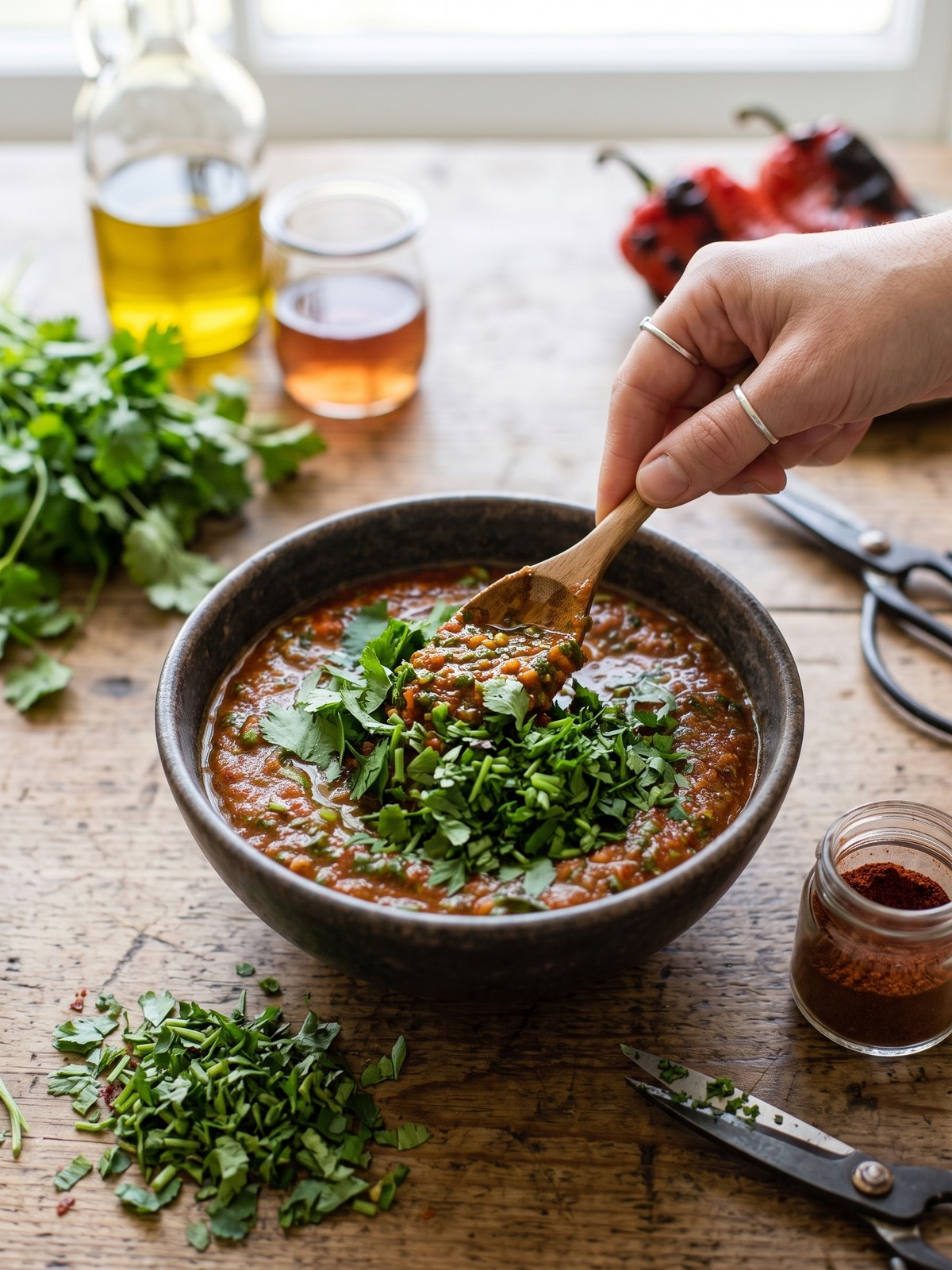
- Step 3 – Pour in the liquids: Add the red wine vinegar and extra virgin olive oil. Stir everything together with a spoon until well combined. The sauce should look loose but chunky, with the oil and vinegar barely emulsified.
- Step 4 – Rest and taste: Let the sauce sit at room temperature for at least 30 minutes. Taste and adjust salt, vinegar, or chili flakes to your preference. The flavors will deepen as it rests.
- Step 5 – Serve or store: Give the sauce a final stir and spoon it over grilled steak, chicken, fish, or vegetables. Transfer any leftovers to a clean jar with a tight-fitting lid.
How to Know It’s Done
- Texture check: The sauce should be chunky and spoonable, not puréed. You should see distinct flecks of red pepper, green herbs, and bits of garlic suspended in the oil.
- Flavor meld: After resting, taste the sauce. The raw garlic bite should have softened, and the chili warmth should be present but not overpowering. The vinegar should taste bright, not harsh.
- Oil separation is normal: Don’t worry if the oil rises to the top after sitting. This is typical for chimichurri. Just stir it back together before serving.
- Color cue: The sauce will be a deep, rusty red with green flecks. If it looks pale, add a pinch more salt or a splash of vinegar to brighten it up.
Nora’s Tips for Best Results
- Hand-chop for the right texture: I’ve tested this in a food processor, and it turns into a smooth paste that lacks the rustic charm of a hand-chopped chimichurri. A sharp knife gives you control over the size of every piece.
- Use room-temperature ingredients: Cold olive oil can dull the flavors. Let the oil and peppers come to room temperature before mixing for a more vibrant sauce.
- Don’t skip the resting time: Those 30 minutes are when the magic happens. The salt draws out moisture from the peppers and herbs, creating a more integrated, flavorful sauce.
- Adjust acidity to your taste: If the sauce tastes flat, add a tiny splash more red wine vinegar. If it’s too sharp, a pinch of sugar or a little more olive oil can round it out.
- Make it ahead for deeper flavor: This sauce is even better the next day. I often make a double batch on Sunday and use it all week on everything from eggs to grain bowls.
- Warm it gently if using on hot food: If the sauce has been in the fridge, let it sit at room temperature for 15 minutes or warm it slightly by placing the jar in a bowl of warm water. Pouring cold sauce over hot steak can seize the meat’s juices.
Storage & Leftovers Tips
- Refrigerate promptly: Store leftover chimichurri in an airtight container or jar in the fridge for up to 5 days. The oil may solidify slightly; that’s normal.
- Freeze for longer storage: Spoon the sauce into an ice cube tray and freeze until solid, then transfer the cubes to a freezer bag. They’ll keep for up to 3 months. Thaw a cube or two at room temperature when needed.
- Reheating isn’t necessary: This sauce is meant to be served at room temperature or slightly cool. If frozen, just let it thaw naturally; don’t microwave it or you’ll cook the fresh herbs.
- Revive separated sauce: After storage, the oil and solids will separate. Stir vigorously with a fork or small whisk to bring it back together. If the oil has solidified, let the jar sit at room temperature for 10 minutes first.
- Watch for freshness: Discard the sauce if it develops an off smell, mold, or a fizzy texture. The high oil content helps preserve it, but fresh herbs will eventually degrade.
- Use leftovers creatively: Stir a spoonful into mayonnaise for a smoky sandwich spread, toss with warm pasta, or dollop over scrambled eggs.
Variations & Substitutions
- Swap the herbs: Replace half the parsley with fresh cilantro for a brighter, more citrusy note. Mint or basil can also work in small amounts, but keep parsley as the base for that classic chimichurri backbone.
- Dial up the smoke: Add 1/2 teaspoon of smoked paprika or a few drops of liquid smoke for an even deeper campfire flavor. Start small—liquid smoke is potent.
- Make it spicier: Use 2 teaspoons of chili flakes or add one finely minced fresh red chili, such as a Fresno or serrano, for a fresher heat.
- Try a different acid: Swap the red wine vinegar for sherry vinegar for a nuttier tang, or use fresh lemon juice for a brighter, sunnier sauce that pairs especially well with fish.
- Add a touch of sweetness: Stir in 1 teaspoon of honey or maple syrup if your peppers are on the bitter side or if you prefer a more balanced, less sharp sauce.
- Roast your own peppers: Char 2 large red bell peppers over a gas flame or under the broiler until blackened all over, then steam in a covered bowl for 10 minutes. Peel, seed, and chop. The flavor is unbeatable.
What to Serve With Smoky Red Chimichurri Sauce
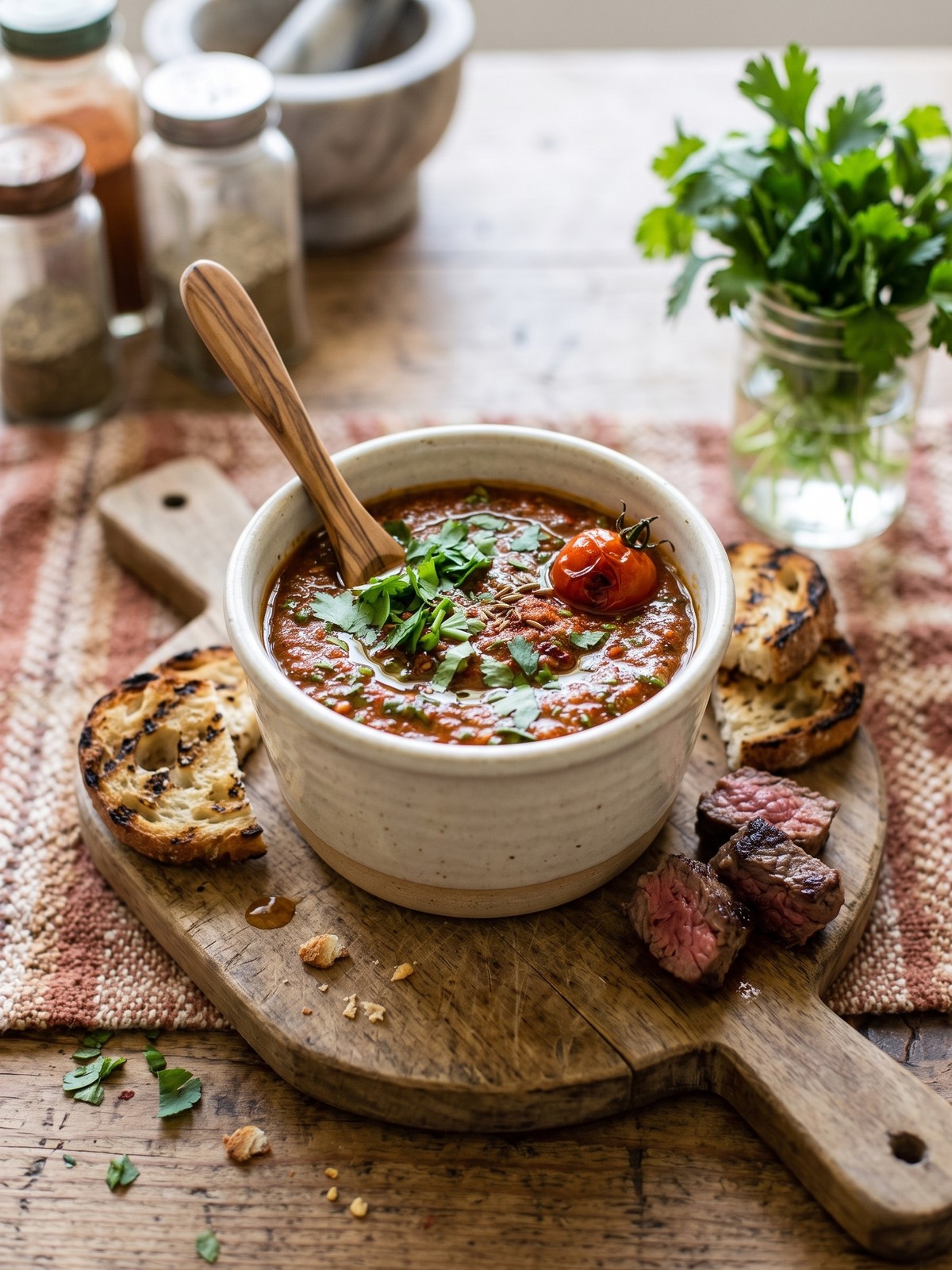
- Grilled flank or skirt steak: The classic pairing. Slice the steak against the grain and spoon the sauce generously over the top while the meat is still warm.
- Roasted or grilled chicken: A spoonful over crispy-skinned chicken thighs or a simple roasted breast adds instant brightness and moisture.
- Grilled or pan-seared fish: Try it with salmon, halibut, or swordfish. The smoky peppers complement the char from the grill beautifully.
- Roasted vegetables: Toss with roasted potatoes, cauliflower, carrots, or asparagus right before serving for a fresh, herby finish.
- Grain bowls and salads: Drizzle over a bowl of quinoa, farro, or brown rice with roasted veggies and a protein for a quick, flavorful lunch.
- Crusty bread or bruschetta: Spoon the sauce over toasted sourdough or crostini with a smear of ricotta or goat cheese for an easy appetizer.
FAQs
You can, but the texture will be more like a paste than a chunky sauce. For the best rustic consistency, hand-chopping is recommended. If you do use a processor, pulse very briefly and check often to avoid over-processing.
Stored in an airtight container, it will keep well for up to 5 days. The oil may solidify slightly, but that’s normal. Let it sit at room temperature for 10-15 minutes and stir before using.
Yes. Freeze it in an ice cube tray, then transfer the cubes to a freezer bag for up to 3 months. Thaw individual portions at room temperature. Avoid microwaving, as it can cook the fresh herbs.
Green chimichurri is made with fresh parsley, oregano, garlic, oil, and vinegar. Red chimichurri, like this one, includes roasted red peppers and often chili flakes, giving it a smokier, slightly sweeter, and spicier profile.
It has a gentle warmth from the chili flakes, but it’s not overly hot. You can easily adjust the heat by using more or fewer chili flakes, or by adding a fresh minced chili for extra kick.
Fresh herbs are key to the bright flavor of chimichurri. In a pinch, you can use 2 teaspoons of dried oregano, but the parsley should be fresh. Dried parsley won’t provide the same texture or taste.
Sherry vinegar is the best substitute for a similar depth. White wine vinegar or even fresh lemon juice can work, though the flavor will be slightly brighter and less robust.
Let the steak rest after grilling, then slice it against the grain. Spoon the room-temperature chimichurri over the top just before serving so the warm meat can absorb some of the flavors without cooking the sauce.
Smoky Red Chimichurri Sauce
Equipment
- Chef’s Knife
- Cutting Board
- Medium Mixing Bowl
- Measuring cups and spoons
- Mixing Spoon
Ingredients
- 1 cup roasted red bell peppers finely chopped
- 4 cloves fresh garlic minced
- 1 cup fresh flat-leaf parsley finely chopped
- 2 tbsp fresh oregano chopped
- 1 tsp dried red chili flakes
- 3/4 cup extra virgin olive oil
- 1/4 cup red wine vinegar
- 1 tsp coarse sea salt
- 1/2 tsp cracked black pepper
Instructions
- Finely chop the roasted red peppers, parsley, and oregano. Mince the garlic. Place all in a medium mixing bowl.
- Sprinkle the red chili flakes, salt, and pepper over the mixture. Toss gently with a fork to combine.
- Pour in the red wine vinegar and olive oil. Stir well until everything is evenly coated and the sauce looks chunky and loose.
- Let the sauce rest at room temperature for at least 30 minutes to allow the flavors to meld.
- Taste and adjust seasoning with additional salt, vinegar, or chili flakes if desired.
- Serve spooned over grilled meats, fish, or vegetables. Store leftovers in an airtight container in the fridge.